
CoCounsel vs Harvey: Which Legal AI Platform Is Right for Your Team in 2026?
.jpeg)


CoCounsel and Harvey represent two different categories of legal AI. CoCounsel, from Thomson Reuters, is research-grounded: it ties its answers to Westlaw and Practical Law, making it especially strong for citation-backed legal research. Harvey is built for scale: it supports due diligence and firm-specific workflows across large document sets, making it well-suited to complex, multi-document analysis. The central distinction is research grounding versus large-scale analysis.
Neither platform is built primarily for commercial contract work. For teams focused on drafting and reviewing contracts, a contract-specialist tool such as Spellbook is often a more direct fit, a point this guide returns to after the head-to-head comparison. The comparison below covers what each platform does, how they differ, which AI models they use, what they cost, and which option suits which team, updated for CoCounsel's next-generation 2026 release.
Key Takeaways
- CoCounsel and Harvey are legal AI platforms for enterprise teams. CoCounsel is built for research-backed workflows using Thomson Reuters content, while Harvey is designed for large-scale collaborative analysis and diligence projects.
- The primary difference in the CoCounsel vs Harvey matchup is their approach. CoCounsel grounds its outputs in proprietary legal content for research-heavy tasks, while Harvey provides a configurable environment for team-based diligence and managing complex legal processes.
- Alternatively, Spellbook is a legal AI suite trusted by over 4,000 legal teams to draft and review contracts with greater speed and precision. It operates directly in Microsoft Word and is the only tool that provides real-time market benchmarks to support data-driven negotiations.
CoCounsel vs Harvey at a glance
| Dimension | CoCounsel | Harvey |
|---|---|---|
| Best for | Citation-backed legal research and analysis | Large-scale diligence and firm-specific workflows |
| Core strength | Westlaw and Practical Law grounding | Bulk document analysis and custom workflows |
| Primary surface | Web platform | Web workspace |
| Underlying AI | Next-generation platform built on Anthropic's Claude | Frontier models plus firm-specific custom training |
| Pricing (estimated) | Tiered per user, scaling with Westlaw access | Enterprise, around 40,000 dollars per year for 10 users |
Official pricing for CoCounsel and Harvey is not published. The figures above are public estimates and should be confirmed with each vendor.
What is CoCounsel?
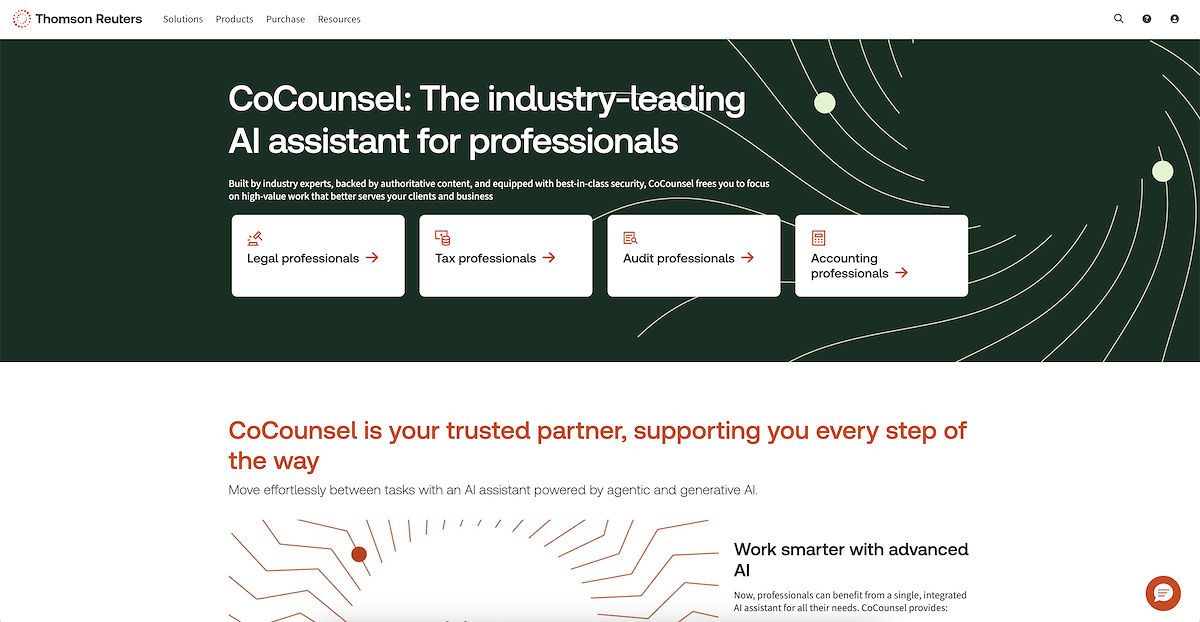
CoCounsel is Thomson Reuters' legal AI platform, built to ground its answers in Westlaw and Practical Law rather than in a general model alone. That grounding is its defining strength: for research and citation-dependent work, pulling from a maintained legal database can reduce the risk of invented case citations that a general model may produce.
By early 2026, CoCounsel reached more than one million professional users and began rolling out a next-generation version that is more agentic: it can plan a task, select its own tools, and adapt during the workflow rather than responding to one prompt at a time. That next generation is being rebuilt on Anthropic's Claude Agent SDK, with general availability expected in summer 2026. Two capabilities stand out:
- Deep Research runs a multi-step research plan, explains its reasoning, and returns a citation-backed report grounded in Westlaw and Practical Law.
- Tabular Analysis is designed to review high volumes of documents against a set of questions, returning results in a sortable table. The specific "10,000 files and 100 questions" figures could not be confirmed in Thomson Reuters' own published materials and should be verified before publication.
The trade-off is fit. CoCounsel is primarily a research and analysis platform, and its value depends on the Thomson Reuters content subscriptions it connects to.
CoCounsel Features
- Word Add-in: For in-document drafting, redlining, and applying playbooks.
- Standalone Portal: A separate web interface for document storage and multi-document analysis.
- Playbooks: Allows teams to check agreements against their own internal standards.
- Multi-Document Analysis: Supports running structured queries across large volumes of agreements.
- Optional Research Layer: Integrates with Westlaw and Practical Law for citation-backed answers.
CoCounsel Pricing
CoCounsel uses a tiered, per-user pricing model billed annually. Costs increase significantly based on the level of access to Thomson Reuters' proprietary content, such as Practical Law and Westlaw. This structure places CoCounsel at the higher end of the market, especially when compared to tools that do not bundle extensive legal research databases. A 30-day trial is available, but all uploaded documents are deleted at the end of the period.
Key Considerations about CoCounsel
A key drawback of CoCounsel is its fragmented workflow. Users must switch between the Word add-in for drafting and a separate web portal for multi-document analysis. The platform's most valuable features, which ground answers in authoritative content to avoid issues like AI-generated fake citations, depend on expensive, separate subscriptions to Westlaw and Practical Law. Without these add-ons, CoCounsel functions primarily as a playbook and document analysis tool, which may not justify its premium price for all teams. This makes the CoCounsel vs Harvey decision more complex for those prioritizing a unified workflow.
What Is Harvey?
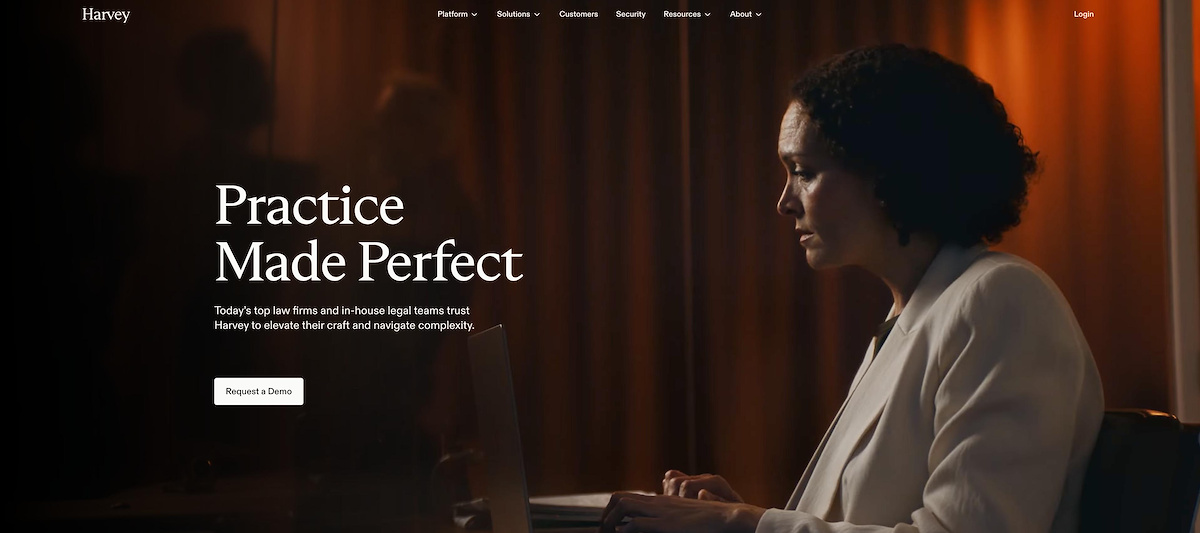
Harvey is a legal AI platform built for large-scale analysis and collaborative projects, aimed at large law firms and enterprise legal teams. Its strength is handling complex, multi-document work in a shared, configurable environment rather than answering isolated questions.
Harvey reports adoption across much of the large-firm market, including about half of the 100 largest United States law firms, alongside a growing base of in-house teams. Three features anchor the platform:
- Assistant handles research questions, document review, memo drafting, and clause alternatives through a prompt-based interface.
- Vault is a secure repository and bulk-analysis engine that runs reviews across very large document sets, supporting analysis of up to 100,000 documents.
- Exact Quote returns character-level citations, allowing an answer to be traced back to the precise language in the source document.
Harvey also offers custom training on a firm's own data, so the model can reflect a firm's templates and preferred work product over time. The trade-off is implementation effort: the configurability that makes Harvey powerful can also require more setup than a team needs if its primary goal is faster day-to-day contract drafting.
Harvey Features
- Vault: A repository for analyzing up to 100,000 documents at once.
- Workflows: Configurable, multi-step processes to standardize legal tasks.
- AI Assistant: A prompt-based interface for legal questions and drafting.
- Collaboration Tools: Shared workspaces with permission controls for team projects.
- Word Add-in: Supports in-document editing and analysis.
Harvey Pricing
Harvey uses an enterprise subscription model with pricing negotiated based on team size. A two-week pilot is part of its standard evaluation process.
- Annual Subscriptions: Pricing is quoted per year.
- Indicative Cost: Approximately $40,000 annually for 10 users.
Key Considerations about Harvey
While Harvey is built for large-scale analysis, its flexibility can introduce significant overhead. The platform requires considerable setup to configure its workspaces and workflows, making it less ideal for teams looking for a tool that works for rapid review right away.
Harvey is positioned as a system for legal operations, which may be excessive for teams focused on accelerating contract drafting and redlining. Its architecture is geared toward complex, collaborative diligence projects rather than the high-velocity transactional work common in many commercial practices. This makes the CoCounsel vs Harvey choice difficult for teams prioritizing speed in their existing Word-based workflows.
Which AI models do CoCounsel and Harvey use?
CoCounsel and Harvey take different approaches to the models underneath. The next generation of CoCounsel runs on Anthropic's Claude Agent SDK, using an agent framework to plan and complete multi-step legal tasks, with answers grounded in Thomson Reuters content. Harvey uses a combination of frontier models and custom training on a firm's own data, allowing output to be tuned to a specific firm's work.
For a buyer, the model matters less than two related questions: where the answer is grounded, and how citations are verified. CoCounsel grounds answers in a legal database; Harvey grounds them in the firm's own documents and training. Model names also change frequently, so any specific model claim should be confirmed with each vendor before a purchase decision.
Is CoCounsel or Harvey better for contracts?
For contract drafting and review specifically, neither CoCounsel nor Harvey is purpose-built. The right choice depends on the broader context of the team's work. CoCounsel can review and analyze contracts and may be a reasonable fit for a team that also needs substantial legal research. Harvey can handle contracts inside larger diligence projects and may suit firms running complex, multi-document matters.
A team focused primarily on commercial contracts, rather than research or litigation, is usually better served by a contract-specialist tool. That is the gap Spellbook fills, with contract review benchmarked against real market data. The decision is less about which generalist platform is stronger overall and more about whether contracts are the team's primary workflow or one workflow among many.
Spellbook, The Smarter Alternative
CoCounsel and Harvey are generalist legal AI platforms that lean toward research and litigation-style document analysis. Spellbook is intentionally narrower. It is an AI platform built for commercial contract work. More than 4,000 legal teams use it, and it is designed to ground every review in a team's own playbooks and real market data.
For a commercial team, the relevant distinction is specialization. Spellbook's features map directly to contract work:
Spellbook Features
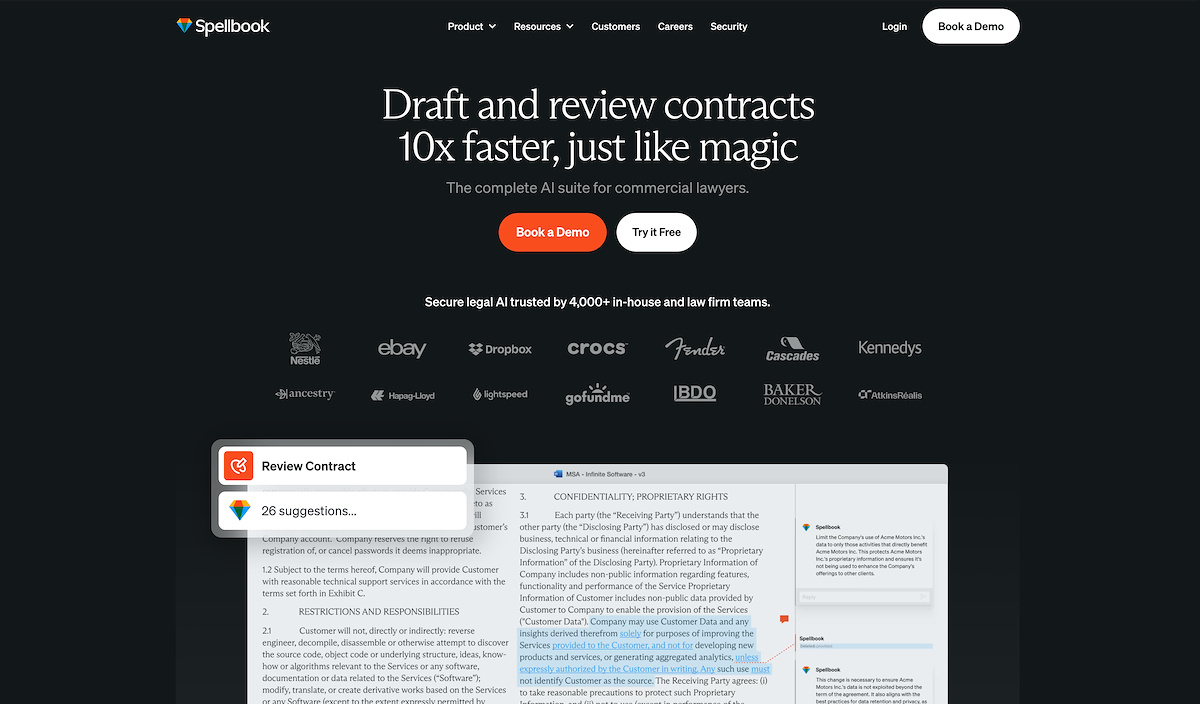
- Review: Instantly analyzes entire documents, suggesting redlines that appear as track changes. This allows lawyers to maintain full control over the final work product while quickly identifying risks and applying playbook standards.
- Draft: Generates new clauses or entire agreements from simple instructions. It can also search a firm’s historical contracts to find and adapt precedent language to the current document’s context and style.
- Ask: A contract-specific Q&A tool that lets lawyers ask questions about a document directly in Word. It provides answers with citations to the relevant contract language for quick verification.
- Compare to Market: Analyzes contract terms against real-time market data from thousands of similar agreements. This feature gives lawyers data-driven benchmarks to support their negotiation positions.
- Associate: An AI agent that manages multi-document projects from a single prompt. It can handle tasks like due diligence review, updating terms across multiple files, and preparing document packages.
Spellbook Pricing
Spellbook uses a custom per-seat pricing model, with costs determined by team size and feature requirements. All pricing is provided through a custom quote process, and a 7-day free trial is available for teams to test all features and workflows.
- Annual Subscriptions: Billed per user, with volume discounts available.
- Free Trial: A 7-day trial is available for individuals and small teams.
You can get started with a free trial today.
Why Commercial Lawyers Love Spellbook
Unlike enterprise legal operations platforms, Spellbook is built for the high-velocity work of commercial lawyers. While it operates exclusively within Microsoft Word, this focus allows for a deep integration that accelerates contract review and drafting without requiring users to switch applications.
This makes it a practical choice for teams who need to improve workflows immediately. It also provides the benefits of AI in a secure, contract-specific tool, helping teams avoid the pitfalls seen with general models, like the case of the lawyer who used ChatGPT. This focus on practical, safe application is a key differentiator in the CoCounsel vs Harvey discussion.
[cta-1]
Harvey vs CoCounsel vs Spellbook: Key Differences
When comparing CoCounsel vs Harvey, the choice often comes down to how your team works. Each platform is designed with a different philosophy, which affects its workflow, features, and ideal user.
1. CoCounsel: The Research-Backed Assistant
CoCounsel’s primary strength is its integration with Thomson Reuters' proprietary content like Westlaw and Practical Law. This makes it a strong choice for research-heavy tasks that require citation-backed answers. However, its workflow is fragmented between a Word add-in and a separate web portal, and its most powerful features depend on expensive, separate subscriptions.
2. Harvey: The Collaborative Analysis Hub
Harvey is designed for large-scale, collaborative projects. It provides a shared workspace for analyzing large document sets, making it suitable for complex diligence and transactional workflows. This focus on being a configurable system for legal operations means it often requires significant setup, which may be excessive for teams focused on accelerating daily contract drafting and review.
3. Spellbook: The Word-Native Contract Specialist
Spellbook is a complete AI suite built specifically for contracts, operating entirely within Microsoft Word. This eliminates context switching and helps teams draft and review contracts with greater speed and precision. Unlike the others, Spellbook is grounded in real-time market data, offering data-driven benchmarks for negotiations. With features like an AI agent for multi-document projects and a focus on high-velocity commercial work, it offers a practical alternative for teams who need to improve their existing workflows immediately. This distinct approach sets it apart in the CoCounsel vs Harvey discussion.
| Feature | Westlaw | LexisNexis | Spellbook |
|---|---|---|---|
| Primary Focus | Deep legal research and litigation support. | Legal research with an emphasis on practical guidance. | Contract drafting, review, and negotiation for commercial law. |
| Core Workflow | Web-based portal for research and document analysis. | Web-based portal integrated with proprietary content libraries. | Microsoft Word add-in, operating where lawyers already work. |
| AI Approach | Agentic AI for multi-step research grounded in proprietary case law. | Generative AI grounded in curated Practical Guidance content and templates. | AI-powered drafting and analysis grounded in your firm's precedents and real-time market data. |
| Key Differentiator | Authoritative legal content foundation and anti-hallucination tools for citation checking. | Integration with Practical Guidance for attorney-authored templates and clause analysis. | The ability to compare terms to market standards and automate multi-document tasks with an AI associate. |
| Best For | Litigators, appellate attorneys, and academic researchers needing exhaustive case law analysis. | Transactional attorneys who rely on Practical Guidance for drafting and benchmarking. | In-house legal teams and law firms focused on accelerating commercial contract workflows, from NDAs to complex indemnification clauses. |
| Pricing | Complex, custom-negotiated enterprise contracts. Often the highest price point. | Tiered, seat-based enterprise pricing that can be complex to navigate. | Custom per-seat pricing tailored to your team's size and needs. |
Which Option Is Right For Your Business?
The choice between CoCounsel and Harvey should start with the work the team performs most often, with a contract specialist as the third option when the work is primarily transactional. CoCounsel leads on citation-backed research, while Harvey leads on large-scale diligence.
- Choose CoCounsel when citation-backed legal research is central and the team already relies on Westlaw and Practical Law.
- Choose Harvey when the priority is large-scale diligence and multi-document workflows across a large firm, and the team has the budget and time to configure a broader platform.
- Choose a contract specialist such as Spellbook when the core work is drafting and reviewing commercial contracts and the team wants market-grounded drafting and review without a separate research subscription.
Many teams ultimately use more than one tool. The first question should be which type of work dominates the team's week, because that is what determines which platform will deliver the most value.
Try Spellbook Free
While CoCounsel and Harvey are built for legal research and complex project management, Spellbook is designed for the core work of commercial lawyers: drafting and reviewing contracts with speed and precision. It works directly in Microsoft Word, fitting into your existing process without extensive setup. You can experience the difference with a free trial today.
Frequently Asked Questions
Is Harvey or CoCounsel a better fit for a small or solo practice?
Neither platform is designed primarily for a small or solo practice. CoCounsel's value scales with the size of a firm's Westlaw and Practical Law subscription, and Harvey's enterprise pricing and configuration requirements are built around large-firm budgets and IT resources. A smaller practice is more likely to find a lower-cost, faster-to-deploy tool a better starting point than either platform.
Can a firm use both CoCounsel and Harvey at the same time?
Yes, and some large firms do, though the two tools rarely overlap in practice. CoCounsel tends to sit with research-heavy teams that rely on Westlaw and Practical Law, while Harvey tends to sit with teams running large diligence projects. Running both usually reflects a firm with genuinely distinct research and diligence workloads, rather than a need to choose one platform over the other.
How long does it take to get up and running with CoCounsel or Harvey?
CoCounsel's existing Westlaw and Practical Law subscribers can generally begin using it with minimal setup, since it builds on a subscription many firms already have. Harvey typically requires a longer onboarding period, particularly when a firm opts for custom training on its own documents and templates, which adds configuration time before the platform reflects that firm's specific work.
What kind of legal work is each platform least suited for?
CoCounsel is least suited to work that depends on a firm's own internal documents and past positions rather than external legal research, since its grounding sits with Thomson Reuters' content rather than a firm's own precedent. Harvey is least suited to work that needs a maintained citation trail to primary legal sources, since its strength is firm-specific document analysis rather than research grounded in a legal database.
Which tool is better for teams that work primarily in Microsoft Word?
Both CoCounsel and Harvey offer Microsoft Word add-ins, but their core platforms operate differently. CoCounsel's workflow is split between its Word add-in for drafting and a separate web portal for more complex analysis, which can interrupt a user's focus.
The Harvey vs CoCounsel discussion for Word integration shows a similar pattern. While Harvey provides an add-in, its main strength is its separate collaborative platform designed for large-scale projects, not necessarily for optimizing the workflow of an individual lawyer working within a single document.
How do CoCounsel and Harvey handle data security and client confidentiality?
Both platforms are designed for enterprise use and emphasize their security measures. As a Thomson Reuters product, CoCounsel is governed by the company's extensive data security and privacy policies, processing data within a private environment to maintain confidentiality.
Similarly, Harvey was developed with a focus on enterprise-grade security, ensuring that all client data is handled in a secure, isolated manner. When considering any AI tool, it's important to understand the specifics of data handling, such as whether your data is used for training models. For example, understanding if ChatGPT is private is a key concern for many legal professionals.
How does Spellbook fit into the Harvey AI vs CoCounsel comparison?
Spellbook presents a focused alternative. While CoCounsel is built for research and Harvey is designed for large-scale project management, Spellbook is made specifically for the core work of commercial lawyers: drafting and reviewing contracts with speed and precision.
It operates exclusively within Microsoft Word, which means it integrates into existing workflows without requiring users to switch applications. Unlike the other two, Spellbook also grounds its analysis in real-time market data, giving lawyers objective benchmarks to use in negotiations. This makes it a practical choice for teams who need to improve efficiency on daily contract work immediately.
Matching the Platform to the Work
CoCounsel is the stronger choice for citation-backed legal research, and Harvey is the stronger choice for large-scale, multi-document diligence. Both are generalist platforms, and neither is built specifically for the daily work of drafting and reviewing commercial contracts. For teams where contracts are the primary focus, Spellbook's specialization in contract review and drafting is the more targeted fit
[cta-2]
Our Research Methodology
This comparison is based on comprehensive research of publicly available information, including product websites, feature documentation, press releases, customer reviews, legal technology publications, and third-party analyses from sources like LawSites, Artificial Lawyer, and industry analysts.
Where pricing information is not publicly disclosed, we've included estimates based on available industry data and user reports. Information is current as of 2026 and may change as products evolve. We encourage readers to verify details directly with vendors and request demos to evaluate fit for their specific needs.
.png)
.jpg)
.png)
Get buy-in, compare platforms, and make AI stick.



Submission Received
Thank you for your interest!
.svg)
