


Demo Spellbook, get an Oura Ring 5*
See how Spellbook helps legal teams draft contracts faster than ever before.
Book Demo

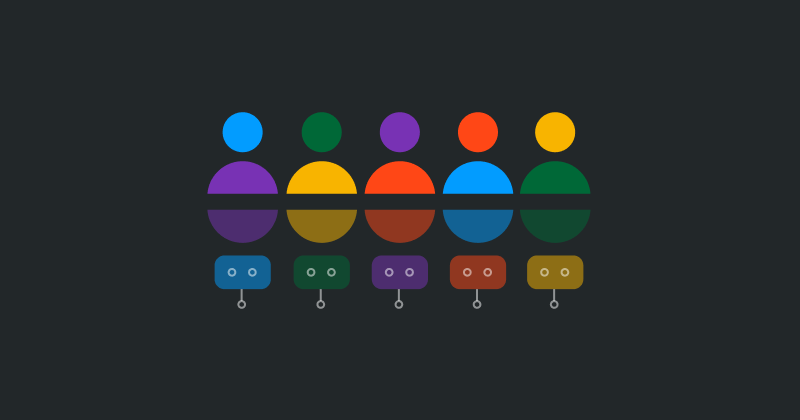
AI takes the legal work that already has a known answer, and lawyers keep the work that decides what the answer should be. That split between AI and lawyers, not a forecast about whether AI will replace lawyers, is what a legal team can act on.
AI and lawyers divide the work by accountability rather than by capability: AI carries no bar license and owes no professional duty to the client, so a lawyer owns every AI output that leaves the building. AI reviews standard third-party paper faster than a lawyer can read it, extracts clauses across a contract portfolio no lawyer has the hours to read end to end, and drafts a baseline agreement in seconds. Lawyers set the risk position that AI review is measured against, decide which fallback positions are worth conceding, and sign the advice a client acts on.
This guide compares AI and lawyers on cost and turnaround, on how accurate legal AI is on client work, on which work in-house teams can stop sending to outside counsel, and on the four decisions inside a legal AI workflow where human judgment still governs.
[cta-1]
Key Takeaways
- AI and lawyers divide legal work by accountability rather than by capability, which is why the line between them holds even as AI capability improves.
- AI takes first-pass review of standard third-party paper, clause extraction across a contract portfolio, and a baseline first draft from a precedent library.
- Lawyers keep the decisions that allocate risk: the standard a review is measured against, which negotiation positions to concede, and signing advice a client relies on.
- Legal AI is accurate enough for a first pass on client work and not for the final answer, because AI can produce a legal statement that reads as authoritative and is wrong.
- AI can absorb a share of the work in-house teams send to outside counsel, and AI cannot replace outside counsel on a privileged opinion or a bet-the-company negotiation.
- The U.S. Bureau of Labor Statistics projects lawyer employment to grow 5 percent from 2025 to 2035, and projects no change for paralegals and legal assistants over the same period.
.png)
How AI is Transforming the Legal Profession
AI analyzes large document sets in seconds, identifies clauses, flags risk, and surfaces terms that may not meet an applicable regulatory requirement. Those outputs are a first pass, not a finding, so the lawyer's time moves from reading the full set to reviewing the exceptions.
Why legal language processing matters for legal AI
Legal AI tools generally rely on Natural Language Processing (NLP), but effective legal systems go further by applying Legal Language Processing (LLP), which accounts for jurisdiction-specific terminology, precedent, and statutory structure.
Standard NLP treats legal text as ordinary language. LLP does not. It recognizes that a controlling precedent in one jurisdiction may carry no weight in another. LLP reads statutes against their definitions and amendment history. It even distinguishes binding authority from merely persuasive authority. This matters because legal output is judged on accuracy and not fluency.
The wider stack these systems sit in is covered in our guide to legal technology.
AI Versus Professional Lawyers: Where Each Is Stronger
AI versus professional lawyers sorts differently task by task. AI is stronger where the work is high volume and the standard it is measured against is already written down. Professional lawyers are stronger where the work sets that standard, carries liability for the result, or has no precedent to pattern-match against. The same split applies to paralegal work, where AI absorbs the high-volume document handling and the judgment calls that depend on reading people and context remain with the people doing them today.
What the adoption and benchmark data shows
Clio's 2025 Legal Trends Report puts AI use among legal professionals at 79 percent, a figure that held steady from 2024 into 2025, with 82 percent saying they plan to increase their use over the following twelve months. Adoption is now common rather than experimental.
It is also concentrated at the top of the market. Among firms with 100 or more attorneys, 46 percent report using AI-based tools, up from 16 percent in 2023 and 23 percent in 2022, in the American Bar Association's 2024 Legal Technology Survey Report.
The share of legal work that is reachable at all is narrower than those adoption figures suggest. Goldman Sachs Global Investment Research estimates that 44 percent of legal work could be automated or augmented by AI, concentrated in routine and repeatable tasks. The remaining majority is the part a client pays a lawyer to exercise judgment on.
Benchmark performance is both genuinely strong and genuinely narrow. A May 2025 study of 59 large language models on Multistate Bar Exam questions, published on SSRN by Stubenberg and co-authors, found that the top-performing model answered about 97 percent of questions correctly, and that more than two-thirds of the models scored above the average human test-taker. Scoring well on the bar exam demonstrates legal knowledge. It does not amount to practicing law, which turns on judgment, ethics, and accountability for a result.
AI and a lawyer at a glance
| Legal task | Stronger performer | What decides it |
|---|---|---|
| First-pass review of standard third-party paper | AI | Consistency across volume, not interpretation |
| Clause extraction across a contract portfolio | AI | Pattern recall at a scale no lawyer has the hours for |
| First draft from a precedent library | AI, with a lawyer signing off | Speed to a baseline the lawyer then negotiates |
| Benchmarking a term against market standard | AI | Access to comparison data across many agreements |
| Approving a redline that departs from the playbook | A lawyer | The playbook cannot anticipate every counterparty |
| Deciding whether to escalate a matter or close it out | A lawyer | Materiality is a judgment, not a pattern |
| A question of first impression | A lawyer | No precedent exists to pattern-match against |
| Signing advice a client will act on | A lawyer | Bar admission, conduct rules, malpractice liability |
Where AI Is Stronger
AI is stronger on the half of the comparison measured in throughput against a standard someone has already written down.
What a team gains with AI
- Turnaround on first-pass review measured in minutes.
- The same standard applied to every agreement, regardless of who is reviewing or how late in the day it is.
- Coverage of a full contract portfolio rather than the sample a team has time to read.
- A first draft that starts from the team's own precedent instead of a blank document.
What a team gives up with AI
- Output that can be wrong while reading as authoritative, which puts a verification step back into the workflow.
- Configuration debt: the standard the tool measures against has to be written down, kept current, and owned by someone.
- Accountability: AI holds no bar license, owes no professional duty to the client, and carries no malpractice exposure.
Where a Lawyer Is Stronger
A lawyer is stronger on the half of the comparison measured in accountability for a decision rather than throughput on a task. That half also has a cost, and a legal team feels it every month.
What a team gains with a lawyer
- A named person who owns the advice and is answerable for it to the client and to a court.
- Judgment on a question no precedent answers, where pattern-matching has nothing to match.
- A read on the negotiation: which positions a counterparty will actually trade, and which are posture.
- Privilege, which attaches to a lawyer's advice and does not attach to a tool's output.
What a team gives up with a lawyer
- Hours billed on work that does not require judgment, at a rate set for work that does.
- Throughput capped by the number of lawyers available and the hours in their week.
- Variation between reviewers on the same clause.
What the Employment Data Shows
The U.S. Bureau of Labor Statistics projects employment of lawyers to grow 5 percent from 2025 to 2035, faster than the average for all occupations, and projects about 28,700 openings for lawyers each year, on average, over the decade. For paralegals and legal assistants over the same 2025 to 2035 period, the Bureau projects 0 percent change, which it describes as little or no change.
The question has also been examined outside the vendor market. The New York State Bar Association published its own treatment of whether AI will render lawyers obsolete, written from inside the profession rather than from inside the technology industry.
Why the forecast is a separate question
Whether the profession shrinks over a decade and which tasks a team can hand over this quarter are two different questions, and they turn on different evidence. The task split above answers the second. The first is argued directly in the discussion of whether AI can replace lawyers.
How AI and a Lawyer Compare on Cost and Turnaround
AI and a lawyer are billed for different things, so the cost comparison only holds per task. A lawyer reviewing a document population bills hours at an hourly rate, and an AI tool reviewing the same population bills a seat. The AI cost per document therefore falls as volume rises, while the lawyer cost per document stays flat. On first-pass review of standard third-party paper, that difference changes a lawyer's turnaround from days to the same day, and the lawyer's hours move to the parts of the matter a client cannot buy any other way.
Research is one of the places where the saving against lawyer time has been measured. Thomson Reuters puts the time and cost saving from AI-assisted legal research at 30 to 50 percent in its 2025 assessment of AI in professional work. E-discovery shows the same pattern at larger scale, where a large document population is reviewed and categorized far faster than a manual pass would allow.
Where the hours actually move
- First-pass review of standard third-party paper: hours of lawyer time become minutes, with the lawyer reading the flagged exceptions instead of the full set.
- Clause extraction across a portfolio: a task few teams attempt manually becomes a routine query.
- First-draft generation from a precedent library: a baseline agreement in seconds, which the lawyer negotiates rather than types.
- Due diligence triage: a document population sorted by risk before a lawyer opens the first file.
- Benchmarking a term: a comparison that previously depended on one lawyer's recollection of past deals.
Workflows tied to the billable hour often reward time spent rather than outcomes, which makes this kind of efficiency awkward for firm economics. Firms that bill hourly have to decide how that efficiency is reflected in fees, which is part of the wider move toward alternative fee arrangements.
A fuller account of how legal departments sequence this work sits in the guide to AI for in-house law teams, which takes the operational view rather than the comparative one.
Is Legal AI Accurate Enough to Rely On for Client Work?
Legal AI is accurate enough to rely on for a first pass on client work, and it is not accurate enough to rely on for the final answer a client acts on. That is the reliance rule. The accuracy question is not whether legal AI is accurate in general; it is whether it is accurate on the specific task, with a specific standard, and with a specific person checking the result.
What the LawGeex result does and does not prove
A widely cited accuracy result in legal AI is a LawGeex study of non-disclosure agreement review, in which an AI system reached 94 percent accuracy against 85 percent for the human lawyers tested on the same documents, and completed the reviews in seconds rather than hours.
The result holds for one task with a known answer key. Identifying whether a standard NDA contains a defined set of issues is a task with a correct answer someone wrote down in advance. A question of first impression has no answer key, so a benchmark score on the first task says nothing about performance on the second.
Where legal AI accuracy breaks down
Accuracy degrades in three predictable places. The first is novelty: AI performs best where precedent exists and degrades where no clear authority guides the outcome. The second is confident error, where a system produces a legal statement that reads correctly and is not, which is why the verification duty on AI output in legal work is a standing obligation rather than a precaution for edge cases. The third is drift between the standard a tool was configured against and the standard the matter actually needs.
For the narrower comparison of review quality against a manual pass, the measured head-to-head on AI and manual contract review goes further into where each one misses. The reliance rule survives all three failure modes intact: a first pass is a draft, and a draft is reviewed before it becomes advice.
[cta-2]
Can AI Replace Outside Counsel?
No, AI cannot replace outside counsel, and AI can replace a share of the work an in-house team currently sends to outside counsel. Whether AI can replace outside counsel is an outside counsel spend question, and it sorts by matter type rather than by capability. The split below sorts the work an in-house team sends out into the part AI can absorb and the part that stays with outside counsel.
Work that can move in-house
- First-pass review of standard third-party paper: NDAs, vendor agreements, order forms, and renewals measured against a written playbook.
- Clause extraction and reporting across an existing contract set, including change-of-control, assignment, and renewal terms.
- Playbook-based redlining on high-volume paper, where the fallback positions have already been decided.
- Triage: routing the agreements that need a lawyer's attention and closing out the ones that do not.
- Obligation extraction from signed agreements: pulling notice periods, liability caps, and indemnity scope into a form a business team can read.
Work that stays with outside counsel
- A privileged opinion someone will rely on and may later have to defend.
- A bet-the-company negotiation, where the value sits in reading the counterparty rather than the paper.
- A novel regulatory question in a jurisdiction the in-house team does not practice in.
- Litigation, and anything with a reasonable prospect of becoming litigation.
- Specialist deal work the team does not see often enough to be fast or confident at.
What changes in the outside counsel relationship
The practical effect is a change in the mix rather than the end of the relationship. An in-house team that moves those categories inside sends out fewer matters and sends out harder ones, which concentrates the outside counsel budget on the matters that need it. It also changes what the in-house team needs from its own tools, because work that used to arrive pre-filtered by a law firm now arrives raw.
What it takes before the work moves
None of that first list moves inside on the strength of a tool alone. Three conditions decide whether the shift holds.
- A playbook that exists, is current, and has a named owner. In mature programs the playbook is the longer piece of work, not the software.
- A written threshold for what escalates to a lawyer, set before the first agreement runs through the tool rather than after the first argument about one.
- Someone whose job is to read the exceptions. A first pass whose flags nobody opens creates a record that the agreement was reviewed without anyone having formed a view on it.
Where Human Judgment Still Matters Most in Legal AI Workflows
Human judgment still matters most in legal AI workflows at four points, and all four are decisions rather than tasks. A workflow can hand AI every document-handling step and still require a lawyer at each of these, because each one allocates risk to a named person.
The four decisions that stay with a lawyer
- The risk position the review is measured against. How much exposure the organization will accept on this kind of agreement, which is a business judgment before it is a legal one.
- Which fallback positions are worth conceding. What to trade, in what order, to close the deal without giving away the term that mattered.
- Whether a deviation from market standard is acceptable here. Market data shows that a term is unusual; whether unusual is acceptable depends on this counterparty, this deal, and this moment.
- Signing the advice a client acts on. The point at which a named person becomes answerable for the result, to the client and to a court.
Why these four do not delegate
Each of the four assigns consequences to someone. AI can inform all four and decide none of them, because informing is an analytical act and deciding is an accountable one. A tool can report that a limitation of liability clause sits outside the range observed in comparable agreements. It cannot hold a view on whether this organization should accept that exposure, and it has nobody to answer to if the view turns out to be wrong.
What makes each decision operational
Each of the four becomes operational only once it carries a number or a name. The risk position is a liability cap, a carve-out list, and the exposure above which a matter escalates. The fallback order is a written sequence rather than an instinct. The market-deviation call needs a named person who makes it when the data is ambiguous, so the decision needs a named owner before the data is ambiguous.
That asymmetry is also where most of the legal implications of AI use actually sit. The compliance questions that follow are secondary to it: they are questions about how a lawyer documents a decision that was a lawyer's to make in the first place.
How Lawyers Use AI Without Losing Judgment or Control
Lawyers use AI without losing judgment or control by fixing two things in advance: where AI output enters the workflow, and who reviews it before it leaves. When both are decided up front, AI absorbs the repetitive high-volume work and the lawyer keeps the judgment, the strategy, and the relationships. How that division plays out differs by practice area.
Transactional lawyers
AI handles the first draft and the line-by-line comparison work. It generates a baseline agreement, surfaces clauses from a precedent library, and flags where a counterparty's redlines deviate from market standard. That frees the lawyer for the part AI cannot do: gauging the client's risk appetite, judging which departures from the playbook are worth the argument, and shaping negotiation strategy.
The failure mode to watch is bulk acceptance. Accepting a set of proposed redlines in one action approves substantive changes alongside the clerical ones, so the convention worth holding is that any proposed change to an operative term is reviewed individually.
Litigators
AI accelerates the research and review layer, work that once consumed entire days. It surfaces relevant precedents, checks citations, and scans lengthy deposition transcripts to flag inconsistencies and recurring themes. Courtroom strategy, witness examination, and the read-the-room judgment of when to press and when to concede remain firmly human.
In a 2025 federal case, attorney Joseph McMullen credited an AI legal tool with helping to build detailed evidence timelines and citation checks that contributed to a win against a government agency for procedural violations.
In-house counsel
General counsel face relentless contract volume and continuous compliance monitoring. AI triages incoming agreements, monitors regulatory changes, and summarizes complex contracts in plain language for non-lawyer stakeholders, which lets a general counsel spend more time as a business partner and less as a reviewer of standard paper.
Canadian firm KMSC Law reports that Spellbook drafts demand letters from client conversation notes in 10 to 12 minutes instead of 30 to 40 minutes. One partner estimates that it helps him bill an extra hour a day.
The pattern across all three is the same. AI compresses the time spent on preparation and review, and lawyers reinvest that time in the strategic, relational, and ethical work that defines the profession. Control is preserved not by using less AI but by deciding in advance which outputs a lawyer has to approve.
The Ethical and Regulatory Framework for Lawyers Using AI
Whether AI can replace lawyers is ultimately limited by ethics and regulation. Professional rules define how AI may be used, who is accountable for outcomes, and why human legal judgment has to remain in control.
- Professional liability and the black box problem (American Bar Association (ABA) Model Rule 1.1): courts and regulators treat hallucinations as a competence risk. Under the competence requirement in those rules, lawyers are responsible for understanding and verifying AI outputs.
- Attorney-client privilege in the cloud (ABA Model Rule 1.6): the duty of confidentiality requires lawyers to safeguard client data when using AI tools, including evaluating cloud storage, third-party access, and whether an AI vendor retains or reuses sensitive information.
- Unauthorized practice of law (ABA Model Rules 5.3 and 5.5): AI cannot provide legal advice on its own, and lawyers must supervise AI use so that it does not cross into activities reserved for licensed attorneys.
- Billing for AI-assisted work (ABA Model Rule 1.5): a lawyer charging an hourly fee may bill only for time actually expended, so time AI saves cannot be billed as hours worked. ABA Formal Opinion 512 addresses fees and expenses for generative AI use.
Which rules actually bind a lawyer
The ABA Model Rules are a model code rather than binding law. Each state adopts and amends its own rules of professional conduct, so the operative text and the numbering vary by jurisdiction, and a lawyer's duty is set by the rules of the state in which that lawyer is admitted. The current position in each jurisdiction, including which bars have issued their own AI guidance, is tracked in the guide to state bar rules on AI use.
Where Spellbook Fits
Spellbook is an AI contract tool for lawyers that assumes human review of every output. It works the half of the comparison above where AI is stronger, which is first-pass contract review, drafting from a team's own precedent, and benchmarking a term against market data, and it leaves the lawyer every call that allocates risk. Contract work spans drafting, review, negotiation and renewal, and Spellbook covers all four.
What the platform does
- Contract review inside the document: Spellbook's Review feature surfaces risks and proposes redlines as native Track Changes in Microsoft Word.
- Drafting from a team's own precedent: the Draft feature generates clauses and full agreements from saved standards and prior agreements, using GPT-5.
- Enforcing positions a team has written down: the Playbooks feature applies those positions so the same standard reaches every agreement, rather than the standard whoever is reviewing happens to remember.
- Benchmarking a term against market: the Compare to Market feature shows where a term sits against data drawn from 20M+ real contracts.
- Multi-document work across a deal: the Associate feature runs review and redlining across a set of documents, with a lawyer supervising every consequential step.
What Spellbook is not
- A legal research platform: it works on contracts, and it integrates with the systems a team already stores them in.
- A litigation tool: it does not help with discovery, motions, or anything that goes in front of a judge.
- A substitute for a lawyer's sign-off: every output is a proposal a lawyer accepts, edits, or rejects.
- A compliance platform: it does not monitor regulatory change or manage obligations after a contract is signed.
Pricing is per seat and scales with team size, and there is a free seven-day trial that needs no sales call and no implementation project. Try Spellbook free to see what a first pass looks like on your own contracts.
[cta-3]
Frequently Asked Questions
Can AI Replace Lawyers Completely?
No. AI cannot completely replace lawyers because it lacks the human judgment, ethical reasoning, and ability to navigate complex and nuanced legal issues. AI cannot represent clients in court or provide personalized legal counsel. The University of Iowa College of Law reaches the same conclusion in its own assessment of whether AI will replace lawyers. Legal AI has advanced dramatically, and it remains a tool rather than a substitute for skilled legal professionals.
What Legal Tasks is AI Replacing Right Now?
AI is automating the repetitive, high-volume tasks within legal work: document review, first-draft contract generation, clause extraction, legal research summarization, and due diligence triage. The key distinction is that these are tasks being automated and not roles being eliminated. The work compresses, and the lawyer's judgment still governs the result.
Which Legal Tasks Are Best Suited for AI?
The legal tasks best suited for AI share one property: someone can write down in advance what a correct result looks like. Where that standard exists, the work rewards consistency and pattern recognition over interpretation, and volume makes the saving worth having. Where it does not exist, no amount of accuracy on similar documents transfers. The test is therefore not how text-heavy a task is but whether the answer key can be written before the work starts.
Which Legal Tasks Should AI Not Be Used For?
AI should not be the final step on anything that becomes advice. That covers an opinion a client will rely on, a position taken in a filing, a question of first impression with no governing authority, and any judgment about how much risk an organization should accept. AI can prepare the material for all four. A lawyer decides the outcome and is answerable for it.
Are There Jurisdictions Where AI Has Replaced Lawyers in Specific Contexts?
Not in any complete sense. Some jurisdictions use AI-assisted decision tools in narrow administrative and lower-court settings. Those systems assist or triage, and final decisions retain human oversight. No country has authorized AI to practice law or to represent clients in place of a licensed attorney.
- Monthly AI spend
- ROI of legal tools
- Impact of AI


.png)
.jpg)
.png)
.svg)


Submission Received
Thank you for your interest!
.svg)
