
Callidus vs LegalOn: Which Is the Top Pick in 2026?
.jpeg)


Choosing the right AI legal tool involves a detailed look at Callidus vs LegalOn, two distinct platforms for contract review. Callidus (StrongSuit) offers a flexible, multi-model approach with legal research capabilities, while LegalOn provides a specialized, playbook-driven system for enforcing consistency. To help you find the right fit, we will compare their product features, pricing, and AI models, and see how they measure up against alternatives designed for drafting and reviewing contracts with greater speed, precision, and data-driven market insights.
Key Takeaways
- Callidus and LegalOn are both AI-powered contract review tools that operate within Microsoft Word. Callidus offers a flexible, multi-model approach for various legal tasks, while LegalOn provides a specialized, playbook-driven system for enforcing consistency.
- The primary difference in the Callidus vs LegalOn matchup lies in their core function. Callidus uses a dynamic system that selects from multiple AI models for tasks like drafting and legal research, while LegalOn focuses on applying curated, attorney-authored playbooks to ensure contracts adhere to specific standards.
- As an alternative, Spellbook is trusted by over 4,000 legal teams to draft and review contracts with exceptional speed and precision. It is the only legal AI that provides data-driven negotiation insights by comparing contract terms against real-time market benchmarks from thousands of similar agreements.
[cta-3]
1. Callidus
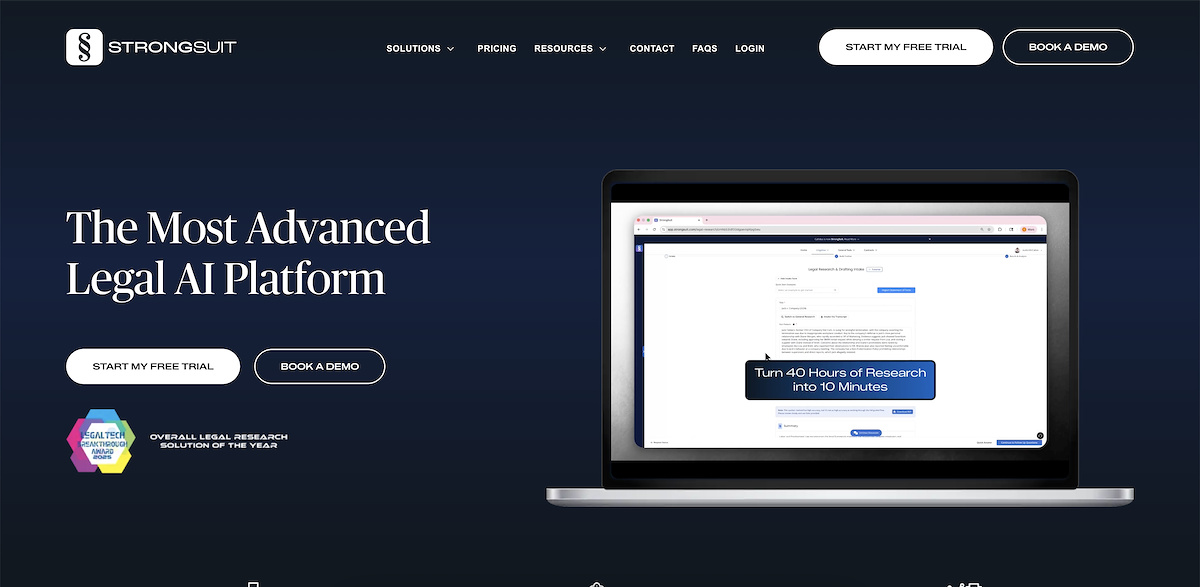
Callidus (StrongSuit) is a flexible AI assistant that operates within Microsoft Word, designed to support a range of legal tasks from drafting to research. It serves teams that need a generalist tool for contract review, redlining, and legal Q&A. Unlike the specialized, playbook-driven approach of LegalOn, Callidus offers broader functionality through its multi-model system. However, this generalist nature means its playbook features are less developed, and the platform is still working to establish a clear identity in the legal AI space.
Callidus Features
Callidus operates as a Microsoft Word add-in with several distinct modules designed for different legal tasks.
- A Negotiate tab for analyzing contracts against playbooks and a Draft tab for generating new clauses.
- A Chat feature for legal Q&A, which uses an exclusive partnership with CourtListener for case law citations.
- A multi-model system that routes tasks to different AIs like GPT-4 and Claude based on the specific workflow.
- A Compare Contracts tool to align third-party documents with internal templates.
Callidus Pricing
The platform uses a flat-rate pricing model that aims for simplicity.
- An all-inclusive license costs $3,000 per user per year.
- This fee includes unlimited usage, onboarding, and support without added costs.
- Discounts are available for larger teams, but prices may increase following a planned rebrand.
Key Considerations about Callidus
While Callidus offers broad functionality, its generalist approach means some features lack the depth of more specialized tools. For instance, its playbook capabilities are less developed and do not include the automatic fallback logic found in some alternatives.
The platform is also undergoing a significant rebrand and redesign, which may introduce changes for current and future users. This, combined with its relatively new presence in the market, means it has yet to establish a strong brand identity.
For teams that need data-driven answers on market standards, Callidus provides limited functionality. Other tools offer features to compare terms against thousands of real-time agreements, providing a more robust basis for negotiation.
2. LegalOn
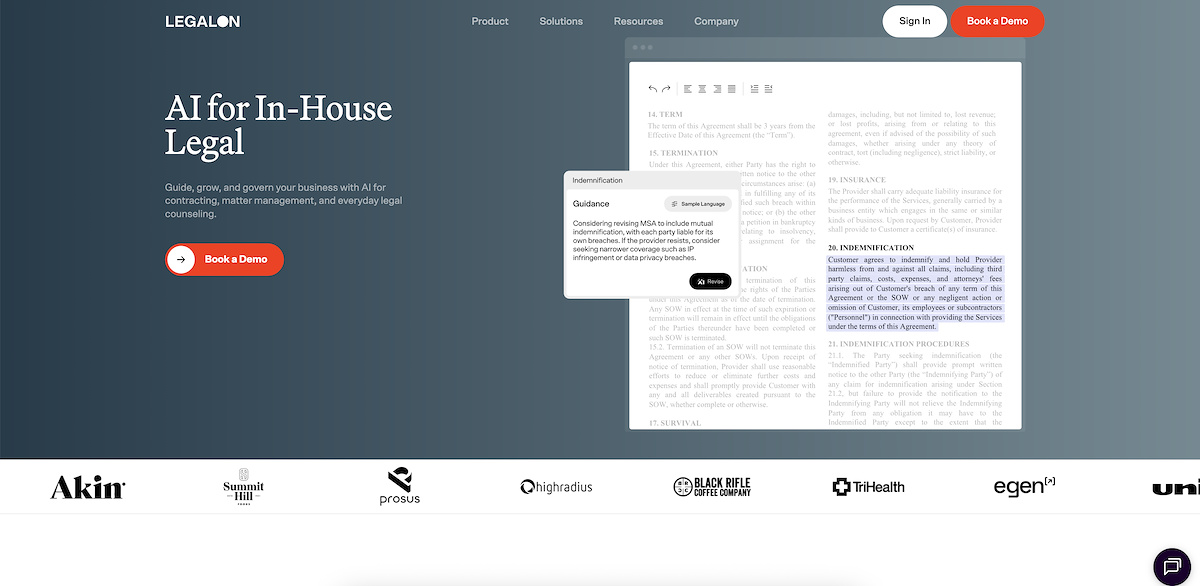
LegalOn is a contract review platform that focuses on applying predefined standards to agreements through a playbook-driven system. It is designed for in-house legal teams that manage high volumes of recurring commercial contracts, such as MSAs and NDAs. Unlike the more flexible, multi-model approach of Callidus, LegalOn prioritizes applying curated legal standards to identify risks and deviations. This specialized focus on review means it offers less functionality for broader legal tasks like drafting from scratch or legal research.
LegalOn Features
When comparing Callidus vs LegalOn, it's important to understand that LegalOn's features are centered on a structured, playbook-driven review process within Microsoft Word.
- A playbook system that applies curated legal standards to identify risks and deviations.
- Conceptual issue detection that flags problematic terms like indemnification or liability.
- Attorney-authored guidance that explains the context behind each flagged issue.
- An AI assistant for ad hoc drafting, summarization, and Q&A on specific contracts.
- A web application for basic intake, matter management, and template storage.
LegalOn Pricing
The platform uses a modular pricing model based on user count and selected features.
- Pricing is on a per-seat, per-module basis.
- Individual licenses with limited features start at around $3,500 per user per year.
- A five-user enterprise plan with all core modules costs approximately $40,000 annually.
Key Considerations about LegalOn
LegalOn’s specialized focus on playbook-driven review is also its main limitation. The platform is designed to enforce consistency, which can make it feel rigid compared to more flexible AI tools.
Its capabilities are less developed for drafting new agreements from scratch or conducting broader legal research. This narrow focus means it functions best as a specialized component within a larger legal tech stack, rather than an all-in-one solution.
Furthermore, while it excels at applying internal standards, it offers limited insight into external market positions. Teams that need data-driven answers for negotiations may find more value in tools that can compare terms against real-time benchmarks from thousands of similar agreements.
3. Spellbook, The Smarter Alternative
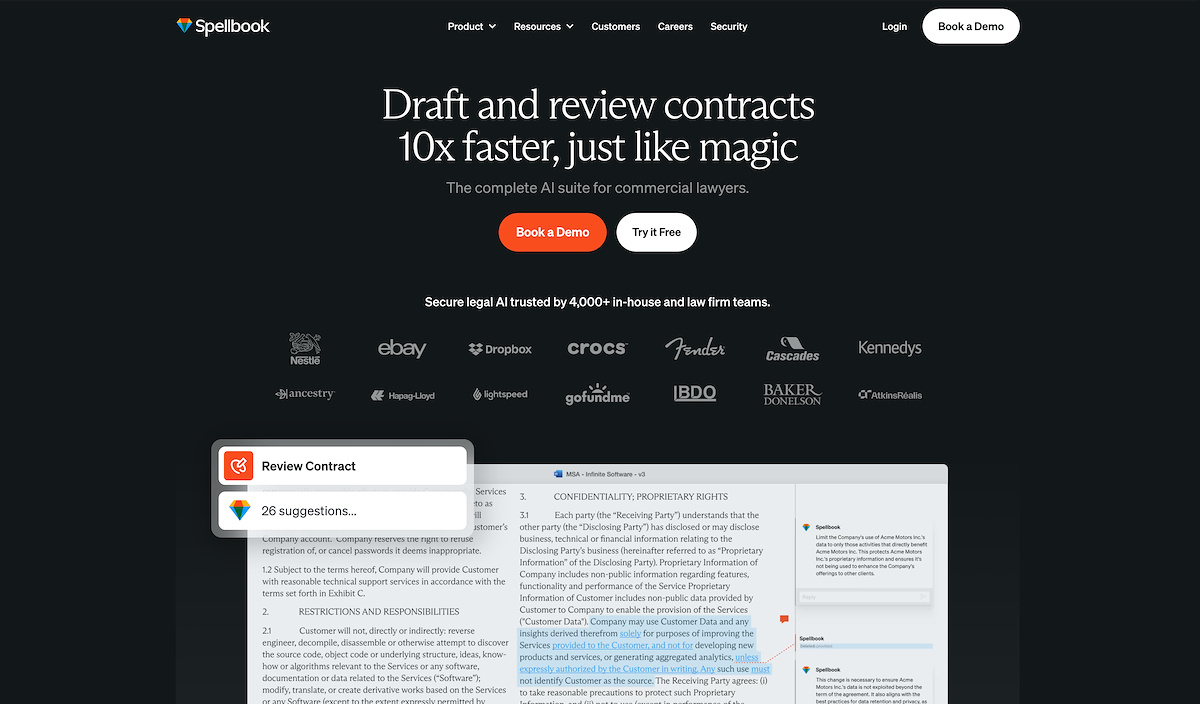
While the Callidus vs LegalOn debate focuses on playbook-driven review, Spellbook is a complete AI suite for contracts and commercial law. It works directly in Microsoft Word, helping over 4,000 legal teams at companies like Dropbox and Fender draft and review agreements with greater speed and precision.
Spellbook is also the only contract AI grounded in real-time market data. Its Review feature analyzes contracts against live benchmarks from thousands of similar agreements, giving lawyers data-driven answers to "What's market?" during negotiations.
Spellbook Features
Unlike tools that focus on a single aspect of contract work, Spellbook provides an integrated suite of features designed to assist lawyers through the entire contract lifecycle. This makes it a strong contender in the Callidus vs LegalOn comparison for teams seeking a more complete solution.
- Review: Instantly analyzes entire contracts to identify risks, suggest redlines, and flag missing clauses. It works with custom playbooks to apply your firm’s specific standards, combining the structured approach of LegalOn with the flexibility of AI.
- Draft: Generates new clauses or entire agreements from simple instructions. It can also search your firm’s historical contracts to find and insert precedent language, automatically adapting it to fit the style and defined terms of the document you are working on.
- Ask: Functions as a contract-specific Q&A tool directly within Word. You can ask questions about obligations, dates, or specific terms and get immediate answers with citations pointing to the exact language in the document.
- Compare to Market: Provides data-driven negotiation leverage by comparing your contract’s terms against real-time benchmarks from thousands of similar agreements. This feature gives you objective answers on what is "market" for a specific limitation of liability clause, a capability not offered by Callidus or LegalOn.
- Associate: An AI agent that manages complex, multi-document projects from a single prompt. It can handle tasks like performing due diligence across a data room or preparing a full document package, going far beyond simple contract review.
Spellbook Pricing
Spellbook offers custom pricing on a per-seat, annual basis, tailored to your team's size and specific requirements. All plans include the full suite of features, onboarding, and support, with volume discounts available for larger teams.
You can experience how Spellbook helps you draft and review contracts with greater speed and precision by starting a free trial.
Why Commercial Lawyers Love Spellbook
Unlike specialized review tools, Spellbook is built to support lawyers through the entire contract lifecycle, from initial drafting to final negotiation. Its ability to generate new agreements, analyze third-party paper, and provide real-time market data in a single interface is a key differentiator in the Callidus vs LegalOn matchup.
While its deep integration is currently focused within Microsoft Word, this allows for a more powerful and native experience where legal teams already do their work. This unified approach helps lawyers move faster and negotiate with greater confidence, backed by objective data.
[cta-1]
LegalOn vs Callidus vs Spellbook: Key Differences
When comparing Callidus vs LegalOn, the key differences lie in their core philosophies and intended use cases. Callidus offers a flexible, multi-model system for a range of legal tasks, while LegalOn provides a specialized, playbook-driven tool for enforcing consistency. Spellbook presents a third alternative, designed as a complete AI suite that supports lawyers through the entire contract lifecycle with data-driven insights.
1. Callidus
- Flexible AI: Functions as a generalist tool for drafting, redlining, and legal Q&A. It uses a multi-model system that routes tasks to different AIs like GPT-4 and Claude based on the workflow.
- Legal Research: Includes a legal research feature for case law citations through an exclusive partnership with CourtListener, a capability not central to LegalOn or Spellbook.
2. LegalOn
- Structured Review: Specializes in applying predefined standards through a playbook-driven system to identify risks and deviations from company policy.
- Curated Guidance: Provides attorney-authored guidance to explain the context behind each flagged issue, prioritizing consistency over the generative flexibility found in Callidus.
3. Spellbook
- Complete Suite: Operates as an integrated suite for the entire contract lifecycle, from drafting new clauses to analyzing third-party paper, all within Microsoft Word.
- Data-Driven Negotiation: It is the only contract AI that analyzes terms against live market benchmarks from thousands of similar agreements, providing objective data for negotiations on clauses like indemnification.
- Proven and Secure: Trusted by over 4,000 legal teams, Spellbook is SOC 2 Type II certified and supports HIPAA compliance, combining speed with high standards for security and precision.
Which Option Is Right For Your Business?
Your final choice depends on your team’s specific needs, whether that’s enforcing internal policy, increasing deal velocity, or gaining a negotiating edge.
For Teams Prioritizing Strict Compliance
LegalOn is the ideal choice. Its playbook-driven system is purpose-built to enforce consistency across high volumes of recurring contracts. If your main goal is ensuring every agreement adheres to strict internal standards, LegalOn’s specialized focus offers the most direct path.
For Fast-Moving Commercial Teams
Spellbook is the better fit. It supports the entire contract workflow in one place, from drafting new agreements to analyzing third-party paper. This integrated approach helps teams accelerate deals while improving accuracy, making it perfect for those who need both speed and precision.
For Strategic Counsel Focused on Negotiation
Spellbook provides a distinct advantage. It is the only platform that offers real-time market data, giving you objective leverage in negotiations. For complex tasks beyond simple review, its AI Associate can manage multi-document projects, making it a powerful tool for high-stakes work.
The Bottom Line
While the Callidus vs LegalOn comparison highlights different approaches to review, many teams find their needs are better met by a more integrated tool. LegalOn is best for rigid policy enforcement, but Spellbook offers a more powerful platform for teams that need to draft, review, and negotiate with data-backed confidence.
Try Spellbook Free
While the Callidus vs LegalOn discussion centers on review, Spellbook supports the entire contract lifecycle with data-driven negotiation insights not found in other tools. See how more than 4,000 legal teams draft and review contracts with greater speed and precision by starting a free trial.
Frequently Asked Questions
How do Callidus and LegalOn handle different types of contracts?
LegalOn is specifically built for high-volume, recurring commercial agreements like MSAs, NDAs, and vendor contracts. Its strength lies in applying a consistent set of rules from a playbook, making it effective for teams that need to enforce specific standards across many similar documents.
Callidus, with its more generalist approach, can be applied to a broader range of contracts and legal documents. Because it is not tied to a rigid playbook system, it offers more flexibility for unique or highly negotiated agreements where the primary need might be drafting assistance or legal research rather than standardized review.
What are the differences in the AI technology and data security?
Callidus uses a multi-model AI system, which means it selects from different large language models like GPT-4 and Claude depending on the task. This allows for flexibility in drafting and Q&A. For legal research, it connects to the CourtListener database for case law.
LegalOn’s AI is trained to work with its proprietary, attorney-vetted playbooks. Its main function is to identify risks by comparing contract language against these predefined standards. Both platforms operate within Microsoft Word and have security protocols, but questions around how AI is used by lawyers and data privacy are important considerations for any legal team.
How does Spellbook's approach to contract work differ from Callidus and LegalOn?
Spellbook is designed as an integrated AI suite that supports lawyers through the entire contract lifecycle, not just one part of it. While Callidus offers general drafting flexibility and LegalOn provides structured review, Spellbook combines these capabilities and adds a unique data-driven negotiation feature.
The key differentiator is that Spellbook is the only tool that compares terms against thousands of recent, similar agreements. This provides objective market data on what is standard for clauses like payment terms or non-competition clauses. This gives lawyers a distinct advantage in negotiations that goes beyond simple risk flagging.
[cta-2]
Our Research Methodology
This comparison is based on comprehensive research of publicly available information, including product websites, feature documentation, press releases, customer reviews, legal technology publications, and third-party analyses from sources like LawSites, Artificial Lawyer, and industry analysts.
Where pricing information is not publicly disclosed, we've included estimates based on available industry data and user reports. Information is current as of 2026 and may change as products evolve. We encourage readers to verify details directly with vendors and request demos to evaluate fit for their specific needs.
.png)
.jpg)
.png)
Get buy-in, compare platforms, and make AI stick.



Submission Received
Thank you for your interest!
.svg)
