


The 5 Best LexisNexis Alternatives in 2026
.jpeg)


LexisNexis is more than a traditional legal research database. Its current Lexis+ with Protégé platform combines primary and secondary legal sources, citation validation, practical guidance, conversational research, drafting, and document analysis.
The best LexisNexis alternative, therefore, depends on the work the legal team needs to perform. Westlaw offers the closest alternative for comprehensive legal research. CoCounsel Legal combines AI-assisted research, drafting, and document analysis. vLex emphasizes global legal content, while Bloomberg Law combines legal research with dockets and business intelligence. Teams focused primarily on commercial contracts may instead need a contracting specialist tool, such as Spellbook.
This guide compares five LexisNexis alternatives by use case, capabilities, and limitations.
[cta-3]
The Best Lexisnexis Alternatives at a Glance
The table below compares the five alternatives by the job each does best. Four are legal research platforms that compete with LexisNexis directly, and one is a contract drafting and review specialist for teams whose main work is transactional.
Four of these products address legal research needs directly. The fifth, Spellbook, addresses a different use case and does not replace case-law, statutory, or regulatory research.
Why Look for a Lexisnexis Alternative?
Legal teams may consider alternatives because of cost, content coverage, AI capabilities, or practice-specific requirements. An evaluation of alternatives should focus on:
- Research coverage: Relevant jurisdictions, courts, legislation, regulations, and secondary sources.
- Citation validation: How the platform indicates whether an authority remains valid.
- AI functionality: Whether the team needs research, drafting, document analysis, contract review, or a combination.
- Practice focus: Litigation and transactional teams have different requirements.
- Total cost: Content packages, integrations, training, and additional modules can affect the final price.
It is important to define the primary use case first. This prevents the team from comparing products that solve completely different problems.
1. Spellbook: Best for Commercial Contract Drafting and Review
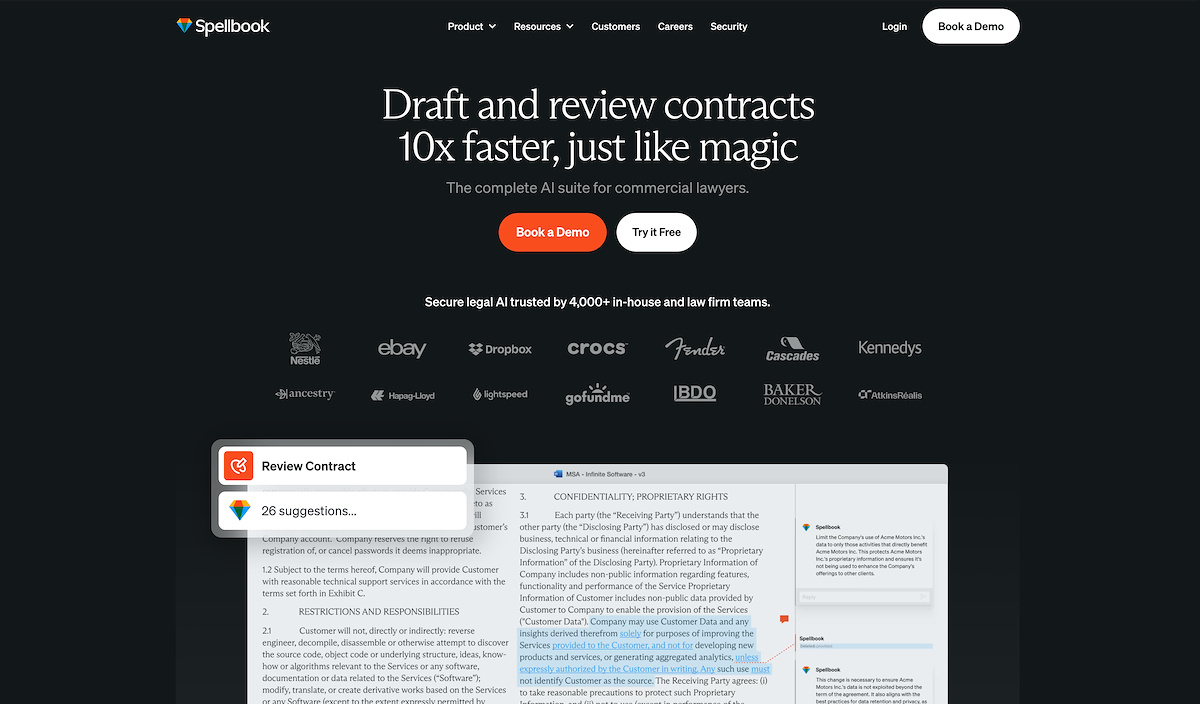
Spellbook is not a direct replacement for LexisNexis legal research. It is a specialist platform for legal teams whose principal work involves drafting, reviewing, and negotiating commercial contracts.
More than 4,500 legal teams use Spellbook. The platform works primarily within Microsoft Word and supports:
- Review of Legal Agreements: Spellbook Review identifies issues and proposes revisions for lawyer approval.
- Negotiation Playbooks: Spellbook Playbooks review agreements against defined requirements and preferred positions.
- Comparison of Provisions with Market Standards: Compare to Market evaluates supported terms according to the agreement type and jurisdiction.
- Document comparison: Spellbook identifies tracked and untracked differences between agreement versions.
Strengths:
- Purpose-built for commercial contracts.
- Drafting and review within Microsoft Word.
- Playbook-based review and precedent retrieval.
- Proposed revisions presented for lawyer approval.
Considerations:
- Spellbook does not replace research into cases, legislation, regulations, or secondary authorities.
- Teams needing both research and contract support may use it alongside a research platform.
- Compare to Market is limited to supported document types and jurisdictions.
Best for: In-house teams and law firms whose primary bottleneck is drafting and reviewing commercial agreements.
[cta-1]
Spellbook Pricing
Spellbook offers custom pricing with annual, per-seat subscriptions tailored to your team's size and requirements. All plans include the full feature suite, onboarding, and support, with volume discounts available for larger teams. Because each plan is customized, a quote is provided after a brief demo. Ready to see how Spellbook can accelerate your contract workflow? Start your 7-day free trial today.
2. Westlaw Advantage: Best for Comprehensive Legal Research
Westlaw Advantage is the closest direct LexisNexis alternative in this comparison. It combines primary and secondary legal content with editorial enhancements, legal analytics, citation validation, and AI-assisted research.
Westlaw includes the West Key Number System, attorney-written headnotes, Notes of Decisions, and Precision Research tools. The Deep Research capability performs multistep research and produces a report supported by Westlaw sources.
A central differentiator is KeyCite, which helps researchers determine the validity of a ruling, , statute, regulation, or administrative decision, and subsequent references by other legal authorities.
Strengths:
- Comprehensive legal research and editorial content.
- KeyCite citation validation.
- Key Number System and attorney-written headnotes.
- AI-assisted research and litigation analytics.
Considerations:
- Westlaw and LexisNexis are both premium research ecosystems.
- The choice may depend on coverage, content packages, citator preferences, interface, and pricing.
- Some drafting and document-analysis capabilities may require related CoCounsel products.
Best for: Legal teams seeking a comprehensive research platform with an established citator and extensive editorial enhancements.
3. CoCounsel Legal: Best for AI-Assisted Legal Workflows
CoCounsel Legal combines legal research, document analysis, and drafting in one AI-assisted environment. The software can work with Westlaw, Practical Law, Microsoft 365, and connected document-management systems.
CoCounsel began as a Casetext product, which was acquired by Thomson Reuters in 2023.
Its documented workflows include:
- Researching legal questions using Westlaw content.
- Reviewing and comparing documents.
- Drafting memoranda, clauses, and agreements.
- Analyzing litigation materials.
- Retrieving precedent from connected systems.
- Drafting and revising within Microsoft Word.
Strengths:
- Research, drafting, and analysis in one environment.
- Grounding in Westlaw and Practical Law.
- Connections with Microsoft 365 and document-management systems.
- Support for litigation and transactional workflows.
Considerations:
- CoCounsel and Westlaw are related Thomson Reuters products rather than independent alternatives.
- Teams should confirm which research and drafting capabilities are included in the selected plan.
- AI-generated work still requires professional review and verification.
Best for: Legal teams seeking an AI workflow platform that connects research with drafting and document analysis.
4. vLex: Best for Global Legal Research
vLex is a legal research and AI platform with content from more than 100 countries. Its database includes case law, legislation, regulatory materials, journals, books, and court records. It also offers the Fastcase Library for United States primary-law research.
vLex is now part of Clio following Clio’s acquisition of the company in 2025. Prospective customers should confirm current packaging and integrations.
The Vincent AI assistant supports legal research, jurisdictional comparisons, argument development, contract analysis, document comparison, and timelines.
Strengths:
- Broad international and comparative-law coverage.
- United States primary-law content through Fastcase.
- Vincent AI research and document workflows.
- Complimentary platform access included as a member benefit by many state and local bar associations.
Considerations:
- Coverage should be tested for the team’s practice area and jurisdiction.
- The free version provided through bar associations may lack access to premium vLex global databases or advanced Vincent AI features.
- Teams should confirm how the Clio acquisition affects packaging and integrations.
Best for: Firms handling international or multijurisdictional matters and practitioners with access through participating bar associations.
5. Bloomberg Law: Best for Legal and Business Intelligence
Bloomberg Law combines legal research with news, dockets, practical guidance, litigation analytics, company information, and market intelligence.
The platform includes primary and secondary research, practice-area resources, treatises, dockets, transactional information, and tools such as Docket Key, Brief Analyzer, Draft Analyzer, and Litigation Analytics.
Bloomberg Law may be particularly useful when legal analysis requires business context. Users can combine legal authorities with company data, litigation trends, deal documents, dockets, and current news.
Strengths:
- Primary and secondary legal research.
- Docket-search and litigation-analysis tools.
- Legal news and business intelligence.
- Company, market, and transactional information.
Considerations:
- Teams focused only on conventional case-law research should consider whether they will use the additional business and market features.
- Coverage should be confirmed for the relevant jurisdiction and practice area.
Best for: Corporate, transactional, regulatory, and litigation teams that need legal authority alongside dockets and business intelligence.
How to Choose a LexisNexis Alternative
Start by identifying the team’s primary need: comprehensive legal research, AI-assisted research and drafting, global coverage, business intelligence, or contract-focused support. Confirm that the platform covers the required jurisdictions and practice areas, provides verifiable sources or approved precedent for AI output, integrates with existing systems, and fits the organization’s budget. The strongest choice will be the platform that performs well on the team’s actual research questions, contracts, and workflows during a representative trial.
LexisNexis Alternatives FAQs
What Is the Closest Alternative to LexisNexis?
Westlaw is the closest direct alternative because it offers comprehensive legal research, editorial enhancements, analytics, AI-assisted research, and the KeyCite citation service. The better fit depends on coverage, content packages, interface, pricing, and the citator the team prefers.
Is Casetext Still Available as a LexisNexis Alternative?
Casetext is no longer a standalone product. Thomson Reuters acquired the company in 2023, and its CoCounsel technology is now offered through CoCounsel Legal and related Thomson Reuters products.
Is There a Free or Bar-Included Alternative to LexisNexis?
Google Scholar provides free access to selected United States court opinions, although its legal collection may not be complete. Participating bar associations may also provide access to Fastcase Library. However, these options should not be assumed to offer the same editorial content, citations, analytics, or coverage as a premium platform.
What Is the Best LexisNexis Alternative for Contract Work?
For teams primarily drafting and reviewing commercial agreements, Spellbook may be a more focused option than a broad research platform. Its Review, Playbooks, Library, and Compare to Market features support contract work, but do not replace legal research.
Can a Legal Team Use More Than One Alternative?
Yes. A team may use Westlaw, CoCounsel, vLex, or Bloomberg Law for legal research while using Spellbook for commercial contract drafting and review. The appropriate combination depends on the organization’s research, litigation, transactional, and business-intelligence needs.
Choosing the Best LexisNexis Alternative
The best LexisNexis alternative depends on the task. Westlaw offers the closest comprehensive research comparison. CoCounsel Legal connects AI-assisted research with drafting and document analysis. vLex supports global research, while Bloomberg Law combines legal authority with dockets and business intelligence.
Teams focused primarily on commercial contract work may prefer Spellbook as a specialist drafting and review platform or use it alongside a legal research product. The strongest choice will come from testing each option against the team’s jurisdictions, documents, workflows, and verification requirements.
[cta-2]
Our Research Methodology
This comparison is based on comprehensive research of publicly available information, including product websites, feature documentation, press releases, customer reviews, legal technology publications, and third-party analyses from sources like LawSites, Artificial Lawyer, and industry analysts.
Where pricing information is not publicly disclosed, we've included estimates based on available industry data and user reports. Information is current as of 2026 and may change as products evolve. We encourage readers to verify details directly with vendors and request demos to evaluate fit for their specific needs.
.png)
.jpg)
.png)
Get buy-in, compare platforms, and make AI stick.


Submission Received
Thank you for your interest!
.svg)
