


GC AI vs Iqidis: Which Is The Top Pick in 2026?
.jpeg)


Choosing the right legal AI tool often comes down to a direct comparison, and for many legal teams, the GC AI vs Iqidis debate is a central one. GC AI offers a combined web and Word add-in experience for research and contract review, while Iqidis (now Irys) presents itself as a centralized "legal operating system" for managing entire matters. To help you decide, we'll break down their features, pricing, and AI architecture, giving you the practical details needed to make an informed choice.
Key Takeaways
- GC AI is a legal AI workspace that combines a web application for research with a Microsoft Word add-in for contract review, while Iqidis (Irys) is a centralized legal operating system designed to manage entire matters within a single platform.
- The primary difference is their workflow approach. GC AI separates research and contract execution into two distinct interfaces, whereas Iqidis organizes all documents, analysis, and collaboration into matter-specific folders to keep projects contained.
- While both tools have their merits, Spellbook is trusted by over 4,000 legal teams to draft and review contracts with greater speed and precision. It operates entirely within Microsoft Word and is the only AI tool that allows lawyers to compare contracts against real-time market data, providing data-driven answers for every negotiation.
[cta-3]
1. GC AI
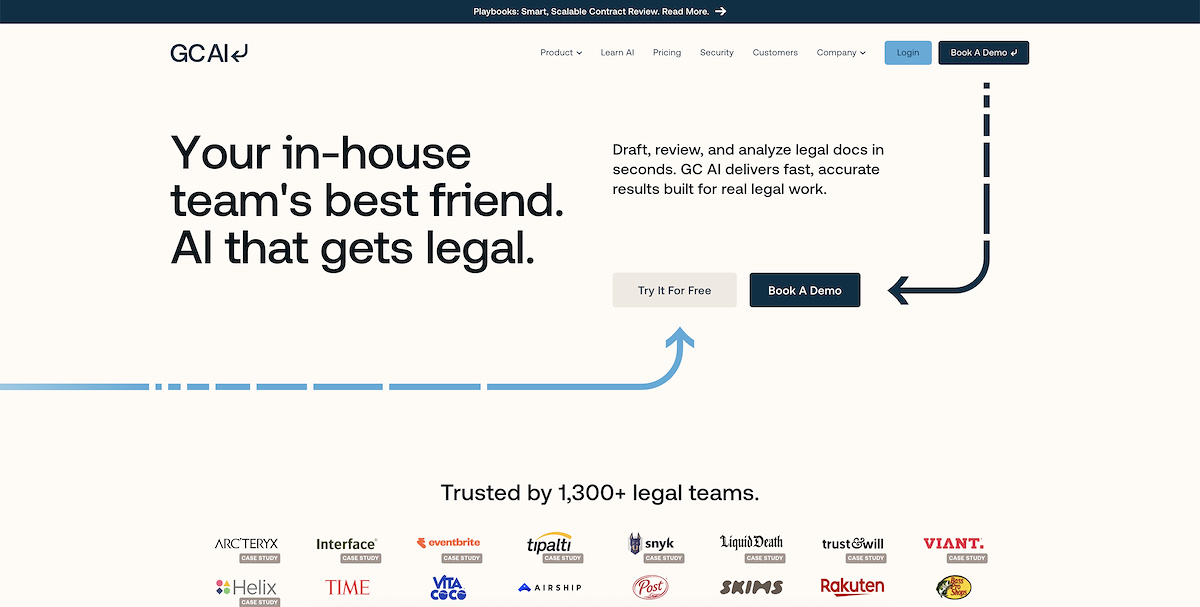
GC AI is a legal AI workspace that separates its functions across two interfaces: a web application for research and analysis, and a Microsoft Word add-in for contract review and redlining. Positioned as a tool for in-house counsel, it aims to support daily legal work through these distinct environments. This dual-interface approach contrasts with platforms like Iqidis, which centralize all project documents and analysis into a single, matter-based operating system to keep workflows contained.
GC AI Features
GC AI’s platform is built around two distinct environments to support legal work.
- Web Application: A central workspace for legal research, multi-document analysis, and managing shared knowledge bases and prompts.
- Microsoft Word Add-in: The primary interface for contract review, redlining, and applying playbook standards directly within documents.
- Playbooks: Allows teams to create and apply standardized review checks based on internal policies and precedents.
- Collaboration Tools: Supports shared prompts, chats, and knowledge bases to help teams maintain consistency.
GC AI Pricing
GC AI uses a tiered, per-seat pricing model based on team size and feature access.
- Solo Tier: $5,000 per user, per year.
- Team Tier: $7,000 per user, per year, which includes SSO and shared collaboration features.
- Volume discounts are available for teams with 10 or more users.
Key Considerations about GC AI
When evaluating GC AI vs Iqidis, it's important to consider the practical implications of its architecture. The separation of functions between a web app and a Word add-in can create a disjointed workflow, requiring users to switch contexts for research versus execution.
The platform is also heavily oriented toward in-house counsel, which may make it a less tailored fit for law firms with different operational needs. While GC AI offers playbooks for standardization, it lacks data-driven negotiation tools. For example, it cannot compare contracts against real-time market data, which is a key feature for lawyers looking to verify negotiating positions with statistical evidence.
2. Iqidis
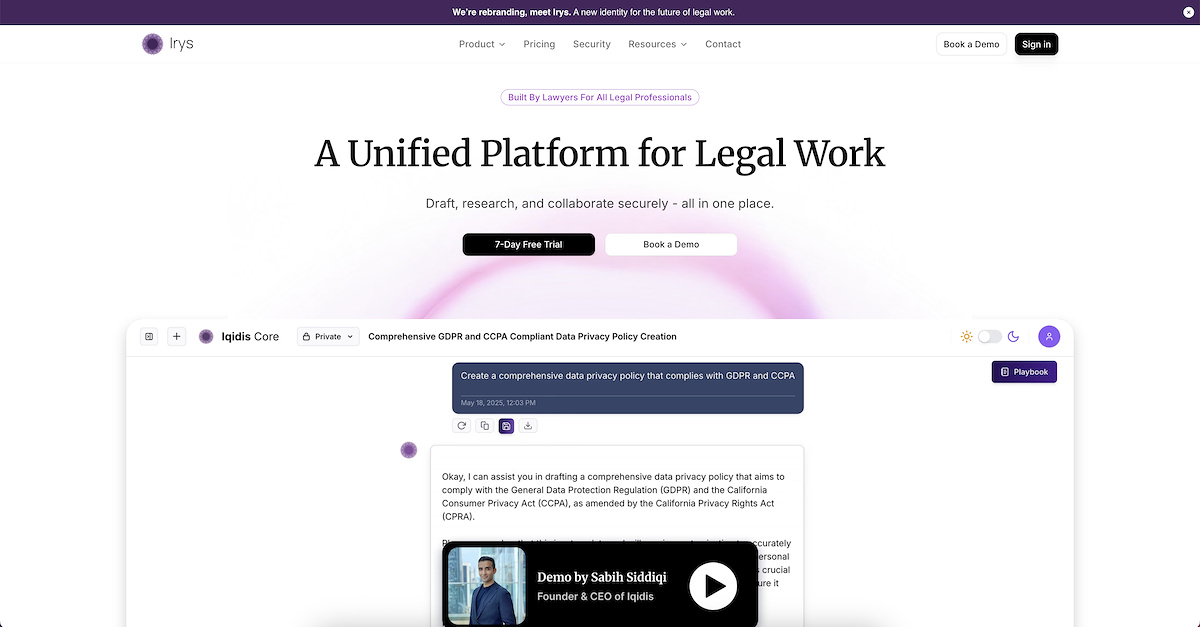
Iqidis (Irys) is positioned as a centralized “legal operating system” designed to manage entire projects within a single platform. It organizes all documents, analysis, and collaboration into matter-specific folders, making it a potential fit for teams handling complex transactional or vendor-contract workflows. Unlike GC AI, which separates its functions across a web app and a Word add-in, Iqidis aims to contain the entire workflow within its own environment. This approach requires legal teams to adopt a new, all-encompassing system for their work.
Iqidis Features
- Matter Folders: Organizes all documents, notes, and analysis for a specific project into a single workspace.
- Multi-Document Analysis: Reviews and extracts information from large sets of documents simultaneously.
- AI Assistant: A chat-based tool for summarizing, drafting, and redlining agreements.
- Precedent Finder: An upcoming feature designed to search and tag an organization’s entire contract history.
Iqidis Pricing
- Enterprise pricing ranges from $329 to $399 per user, per month.
- Billing is structured on a semi-annual or annual basis.
- The company has indicated that pricing is expected to increase.
Key Considerations about Iqidis
When evaluating Iqidis, it is important to consider its “legal operating system” approach. This requires teams to adopt a new, centralized platform, which can disrupt established workflows that are centered in Microsoft Word. Many key features, including a Word add-in and an in-platform drafting editor, are still on the roadmap and not yet available, forcing users to work entirely within the Iqidis environment. Furthermore, the platform does not publicly list key certifications like SOC 2 Type II, which can be a significant concern for legal teams handling sensitive data. These factors make the GC AI vs Iqidis decision more complex for teams that prioritize security and minimal workflow changes.
3. Spellbook, The Smarter Alternative
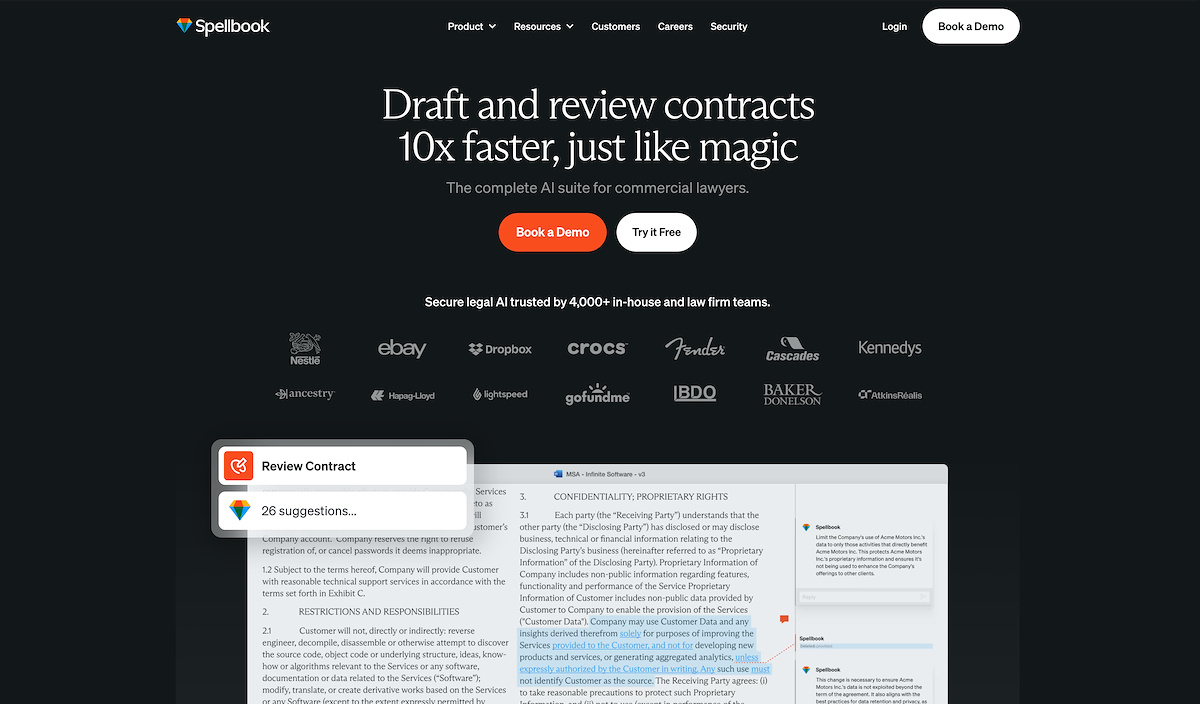
While GC AI and Iqidis present different approaches, Spellbook offers a smarter alternative. It is the most complete AI suite built for contracts and commercial law, integrating directly into Microsoft Word where lawyers already work. This eliminates context switching and helps legal teams draft and review contracts 10x faster, with greater precision.
Spellbook is also the only contract AI grounded in real-time market data. Its Review feature analyzes contracts against live benchmarks from thousands of similar agreements, giving lawyers data-driven answers to "What's market?" in every negotiation. Today, more than 4,000 legal teams—including those at Dropbox, Fender, and Crocs—trust Spellbook for their contract workflows.
Spellbook Features
- Review: Instantly analyzes and redlines contracts directly within Microsoft Word, flagging risks and suggesting improvements. Unlike tools that require switching between applications, this keeps the entire review process in one place, ensuring both speed and precision.
- Draft: Generates new clauses or entire agreements from scratch. It can also pull from a firm’s own precedent library, adapting language to match the style and defined terms of the current document.
- Ask: A contract-specific Q&A tool that lets you ask questions about an agreement directly in Word. It provides answers with citations to the relevant contract language, so you can quickly verify information without leaving your workflow.
- Compare to Market: Analyzes contract terms against real-time market data from thousands of similar agreements. This feature provides statistical evidence to support negotiation positions, a capability not found in the GC AI vs Iqidis comparison.
- Associate: An AI agent that handles complex, multi-document projects from a single instruction. It can cross-reference files, update terms across multiple documents, and prepare entire document packages, automating work that would typically require a junior associate.
Spellbook Pricing
Spellbook offers custom pricing based on your team’s size and needs. Key details include:
- Annual, per-seat subscriptions with volume discounts available for larger teams.
- Custom quotes provided after a demo to ensure a tailored fit.
You can explore all features and see how Spellbook fits your workflow by starting a free 7-day trial.
Why Commercial Lawyers Love Spellbook
Unlike platforms that require you to switch contexts or adopt an entirely new operating system, Spellbook integrates directly into Microsoft Word. While this means its functionality is focused within Word, it prevents the workflow disruption common with other tools.
Lawyers appreciate that it enhances their existing process rather than replacing it. Spellbook provides the data-driven negotiation support missing in the GC AI vs Iqidis debate and is SOC 2 Type II certified, addressing key security requirements for handling sensitive client information.
[cta-1]
Iqidis vs GC AI vs Spellbook: Key Differences
When evaluating GC AI vs Iqidis, the key differences become clear when looking at workflow integration, core features, and security. Each platform takes a distinct approach, which can have significant implications for a legal team's day-to-day work.
1. Workflow and Integration
- GC AI: Operates on a split-interface model, with a web app for research and a Word add-in for review. This can force users to switch contexts, disrupting the flow of work.
- Iqidis: Functions as a self-contained “legal operating system,” requiring teams to move their entire workflow into a new, unfamiliar platform. Its Word add-in is not yet available, making it a significant departure from standard legal tech stacks.
- Spellbook: Integrates directly and exclusively within Microsoft Word. This design enhances a lawyer’s existing process without forcing them to learn a new system, allowing for faster drafting and review with greater precision.
2. Core Differentiators
- GC AI: Provides playbook-based review and research tools but lacks data-driven insights for negotiations. Users cannot benchmark terms against market standards.
- Iqidis: Focuses on organizing documents into matter-specific folders. However, with key features like a drafting editor still on the roadmap, its current functionality is limited.
- Spellbook: Offers the most complete AI suite for commercial law. It is the only platform that grounds its analysis in real-time market data, allowing lawyers to compare contract terms against thousands of similar agreements and negotiate with data-driven confidence.
3. Security and Architecture
- GC AI: Is SOC 2 compliant.
- Iqidis: Does not publicly list a SOC 2 Type II certification, a critical security standard for many legal teams handling sensitive information.
- Spellbook: Is SOC 2 Type II certified, providing enterprise-grade security. This commitment to security and its Word-native, data-driven approach is why over 4,000 legal teams trust Spellbook.
Which Option Is Right For Your Business?
Choosing the right tool depends entirely on your team’s primary needs and existing workflows. Here’s a breakdown based on common legal team profiles.
For Teams Prioritizing Workflow Integration
If your team works primarily within Microsoft Word and wants to increase efficiency without a process overhaul, Spellbook is the logical choice. It integrates directly into your existing workflow, enhancing drafting and review speed and precision while avoiding the context-switching required by other tools.
For Teams Seeking a Centralized Operating System
For legal departments that need to manage entire projects within a single, contained environment, Iqidis may be a better fit. Its structure is designed to organize all documents and analysis into matter-specific folders, which is useful for complex transactional work where centralization is the main goal.
For Teams Focused on Research and Analysis
If your team's primary function is research and multi-document analysis, GC AI offers a dedicated web platform for this purpose. Its separation of research and review functions may appeal to teams that have distinct roles for these tasks and value a separate environment for deep analysis.
Ultimately, the GC AI vs Iqidis comparison highlights different philosophies on legal work. While GC AI and Iqidis require you to adapt to their systems, Spellbook enhances the one you already use. For most commercial lawyers seeking to improve contract work with minimal disruption, Spellbook provides the most direct path to faster, more accurate results.
Try Spellbook Free
While GC AI and Iqidis require you to adapt to their platforms, Spellbook improves the workflow you already have in Microsoft Word. See how its data-driven review tools can increase your contract speed and precision by starting a free 7-day trial today.
Frequently Asked Questions
What AI models do GC AI and Iqidis use?
Both GC AI and Iqidis are built on a combination of leading large language models (LLMs), including those from OpenAI’s GPT series. This architecture enables them to perform complex tasks like summarizing documents, analyzing clauses, and drafting new language based on user prompts.
However, the underlying model is only one component of a legal AI tool’s effectiveness. The quality of the output heavily depends on how the AI is fine-tuned for legal work and integrated into the user workflow. For lawyers, learning to write effective instructions is also critical to achieving accurate and relevant results from these systems.
How are GC AI and Iqidis implemented in a legal team’s workflow?
Implementing GC AI requires a team to adopt two separate interfaces: a web application for research and a Microsoft Word add-in for contract review. This means training users on both platforms and managing a workflow that is split between different environments.
Iqidis, on the other hand, is positioned as a new "legal operating system," which demands a more substantial operational shift. Implementation involves migrating entire matter workflows and documents into its centralized platform, which can be a significant project for teams accustomed to working within their existing tech stack.
How do these platforms address the risks of using AI with confidential information?
Data security is a critical factor when evaluating any legal AI tool. GC AI is SOC 2 compliant, offering a verified standard of security controls. In contrast, Iqidis does not publicly list a SOC 2 Type II certification, which may be a significant consideration for legal teams handling highly sensitive client data.
Beyond certifications, the platform's architecture plays a role in security. Many legal professionals remain cautious about uploading confidential documents to external web applications, raising questions about whether it is legal for lawyers to use AI with certain client information. Tools that operate within a firm's existing, secure environment can help address these concerns.
How does Spellbook compare to GC AI and Iqidis for contract work?
Spellbook provides a distinct alternative by integrating directly into Microsoft Word. This approach avoids the workflow disruptions common with GC AI’s split-interface model or Iqidis’s separate operating system, allowing lawyers to improve their drafting and review speed and precision without leaving their primary work environment.
The key differentiator is Spellbook's data-driven review capability. While GC AI relies on internal playbooks and Iqidis focuses on organization, Spellbook is the only tool that analyzes contract language against thousands of real-world agreements from the market. This gives lawyers statistical evidence to support their negotiating positions on important clauses like indemnification, a feature not found in either GC AI or Iqidis.
[cta-2]
Our Research Methodology
This comparison is based on comprehensive research of publicly available information, including product websites, feature documentation, press releases, customer reviews, legal technology publications, and third-party analyses from sources like LawSites, Artificial Lawyer, and industry analysts.
Where pricing information is not publicly disclosed, we've included estimates based on available industry data and user reports. Information is current as of 2026 and may change as products evolve. We encourage readers to verify details directly with vendors and request demos to evaluate fit for their specific needs.
.png)
.jpg)
.png)
Get buy-in, compare platforms, and make AI stick.


Submission Received
Thank you for your interest!
.svg)
