
Humans Hallucinate Too. 60% of SEC-Filed Contracts Contain Errors
Spellbook Labs analyzed 60,000 pages of public-company agreements across 520 organizations. Sixty percent of contracts had drafting errors.

When a self-driving car crashes, it makes the news. The scrutiny is warranted, but the headlines obscure the baseline. Human drivers cause far more crashes. They happen every day, yet almost none become media stories.
In legal work, AI hallucinations also get the headlines. An AI-generated legal brief citing non-existent case studies. A judge who used AI to create a restraining order and misquoted state law. These are real issues that deserve attention.
But Spellbook sees a different side to AI’s impact on legal and contract workflow. We see the human mistakes that are made when volume and complexity are met with limited hours and manual review. In fact, our data shows saved hours, greater accuracy and increased output when AI is deployed. So we decided to dig into the data to prove what we already know intuitively—humans make mistakes too.
Using Spellbook Reviews, we analyzed 3,000+ SEC-filed contracts from over 500 companies, spanning 22 years. These were executed agreements from some of the largest and most heavily lawyered companies in the world. The findings showed plenty of interesting trends and fun examples.
Six in ten contracts contained drafting issues. Many were minor. But one in 40 was high-risk—defined as changing the meaning of an agreement in a substantially negative way for at least one party—and they were concentrated in provisions that decide who gets paid, who carries the liability, and what happens in a dispute.
None of this is a matter of carelessness by lawyers so much as a consequence of the length, complexity, and disjointed nature of how these types of SEC-filed agreements are prepared and negotiated. In this context, mistakes are inevitable. But they don’t have to be. Every company, public or private, will eventually run its contracts through products like Spellbook that will not only spot errors and risks immediately but suggest fixes based on a company’s own agreement context and real-time market data.



Findings at a Glance
This study should be treated as a proxy for how much humans miss. We kept our analysis deliberately narrow, counting only objective drafting mistakes we could verify from the document itself. We could not judge whether an agreement was signed out of policy, drifted off market, or if a company gave away more than it should, let alone what sits inside the millions of private contracts. These numbers should be thought of as the floor, not a full account of everything worth fixing in an agreement.
A full explanation of the review process, including how we defined and classified issues, appears in Methodology and Scope.
- 01
Some of the world's most valuable companies had the messiest contracts
- 02
No industry was issue-free, but Media, Telecom, and Travel fared the worst
- 03
Old established companies made fewer drafting errors
- 04
The riskiest issues clustered in purchase agreements
- 05
Human review hasn’t improved in the last 20+ years


Some Companies Had 18x the Issues of Others
A large market cap does not automatically mean a flawless contract. Several of the world's most valuable companies had the highest number of issues by count, and the gap between those with the most and least amount of issues was an order-of-magnitude difference.
At the extremes, the lowest-issue company averaged 0.18 issues per contract while the highest exceeded three, an 18x spread.
In aggregate, bigger companies did hold a slight edge, averaging 0.85 issues per contract against 1.31 for everyone else, but that average hid a huge range, with household names sitting at both ends.
These were companies operating in the same filing system, the same legal market, under the same disclosure rules. The gap likely comes down to process: better templates, more standardized playbooks, and more layered review.


A major technology company's notes set the date interest begins to accrue as the bonds' maturity date, thirty years out, rather than their issue date. Read literally, interest never begins to accrue at all, an error in the single term that decides what the bondholders are owed.
Older Companies Drafted More Carefully
Of all the patterns in the study, age was the clearest predictor of contract quality. Companies founded before 1900 averaged about one issue per contract. Those founded in the 2000s averaged closer to 1.5, a 50% increase. So a younger company drafting 1,000 agreements would see roughly 500 more issues than an older company doing the same volume.
The pattern is even sharper when looking at high-risk issues, which more than tripled across the same span. The high-risk rate rose from 1.7% for companies founded before 1900 to 5.9% for those founded in the 2000s. This means younger companies don’t just have more issues, they have disproportionately more serious ones, too.
In addition, the fewest issues consistently belonged to legacy names like IBM, Lockheed Martin, and Bank of America, suggesting that both age and long-established corporate processes contribute to higher-quality contract drafting.
Media and Telecom Carried 5x the Risk of Healthcare
No sector is immune to drafting issues. Total issue rates were remarkably consistent across the board, with every industry averaging roughly one or more issues per contract, ranging from 0.98 in Financial Services to 1.37 in Big Tech. When counting all issues, including typos and minor inconsistencies, every single industry struggles.
That said, when measuring high-risk issues, there is a significant gap. The high-risk rate was 6.8% in Media, Telecom, and Travel and 5.6% in Retail. At the other end of the spectrum, Healthcare and Pharma sat at just 1.4%. That is a roughly five-to-one spread between the most and least exposed sectors.
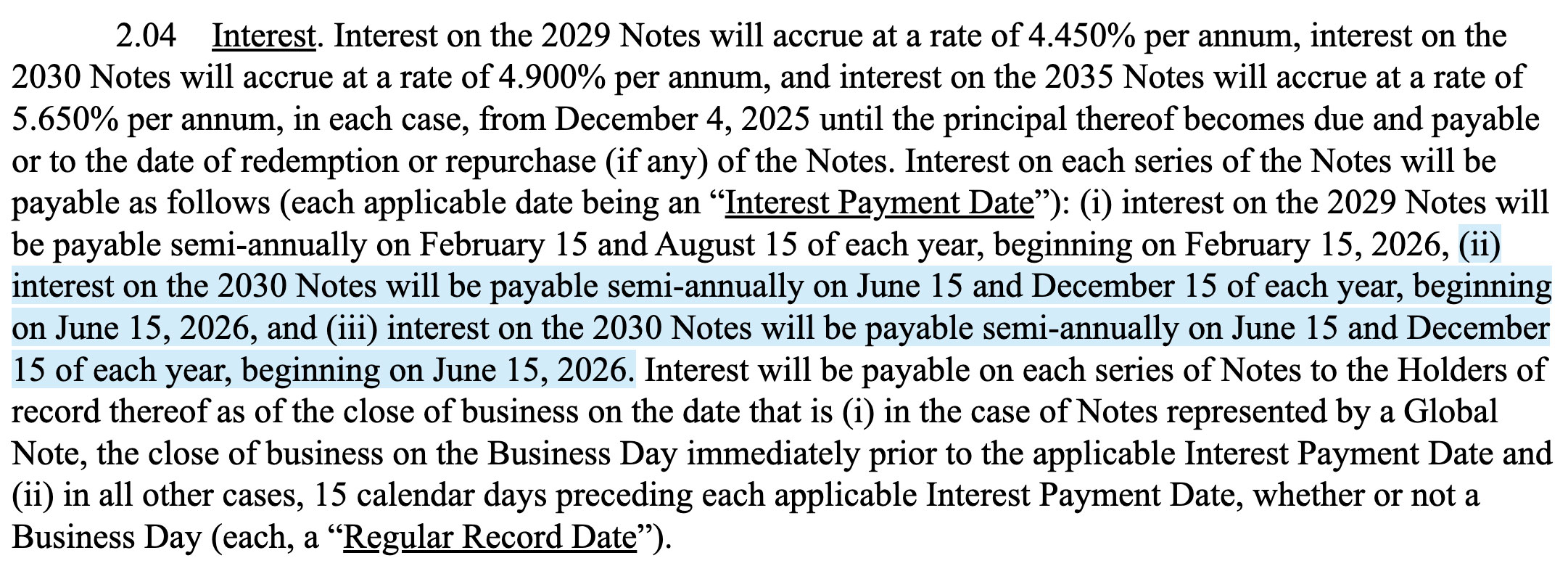

A medical-products company's notes spelled out the full interest terms for one series, then repeated them, while a second series, worth about $1 billion, was left with no interest terms at all. Nothing in a later schedule or the definitions fills the gap. Holders of a billion dollars in notes are left without a contractual answer to the most basic question—when do they get paid?
High-Risk Issues Pooled in Purchase Agreements
Sorted by high-risk rate, the most dangerous contract types were not the ones companies file most often. Purchase agreements rose to the top, with a 15% high-risk rate for note purchase agreements and 12% for stock and asset agreements, roughly four times the study-wide average of about 3%.
This points to the length and complexity of these document types. Purchase agreements have the most moving parts. They set the price, divide up liability, spell out how and when money gets paid, and outline what happens if a party defaults. And they are often negotiated clause by clause under deal pressure. Every custom provision is a fresh chance for a number to contradict its words, a cross-reference to point at the wrong section, or a key term to go undefined.
This makes contract type a practical first signal for where review effort should go. A high-risk issue in a purchase agreement is not the same as one in a templated filing. It is more likely to sit in the terms that decide who pays who, how much, and who absorbs the losses when something goes wrong. Several of the examples earlier in this report—the $190,000 loan-cap mismatch, the billion-dollar notes with no interest payment date—came from exactly these documents.
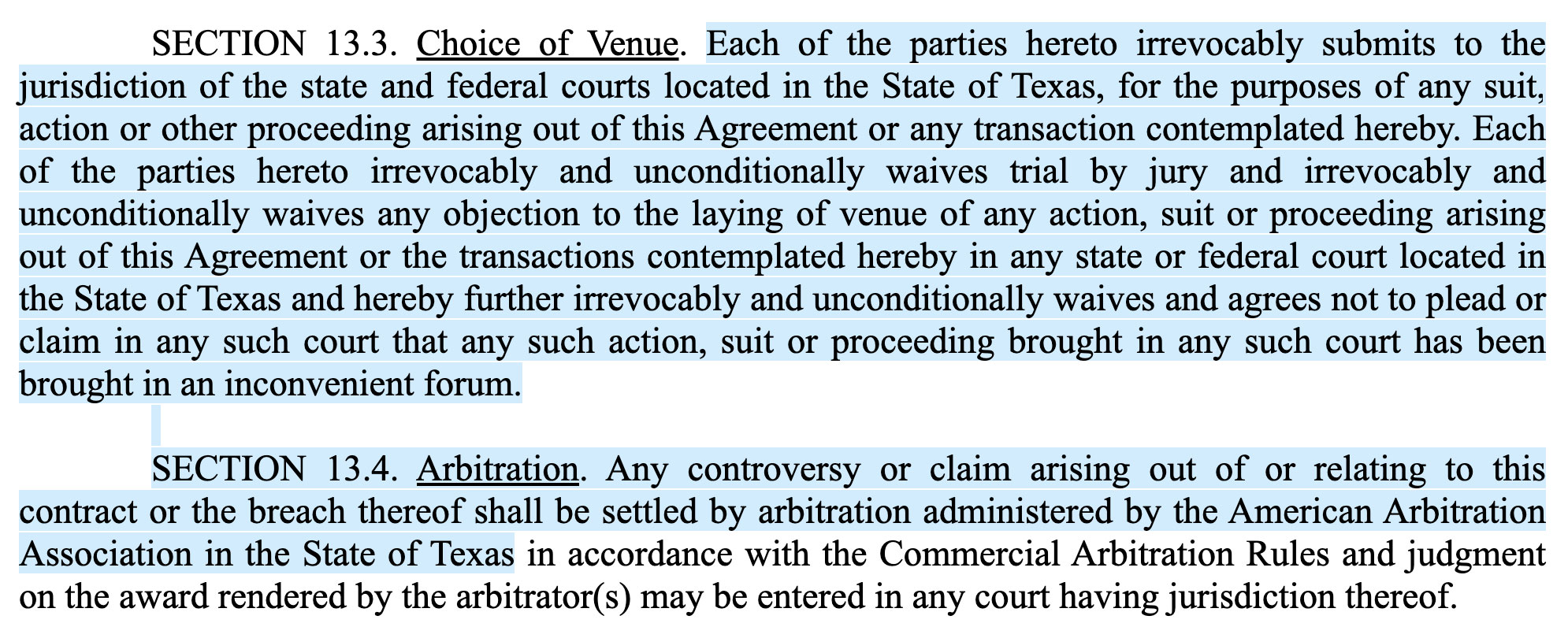
A consumer company's purchase agreement required every dispute to be litigated in Texas courts and, immediately after, required every dispute to be resolved instead by binding arbitration. If the parties ever fall out, they would first have to fight over where the battle belongs, before the actual dispute.
Humans Have Been Making These Mistakes for Years
The most telling cut is over time. We grouped contracts by filing year, from 2005 to the present, and the issue rate per contract remained consistent: 1.15 issues per contract in 2005–2009, 0.98 in 2015–2019, and 1.29 in 2020–2024.
The earlier years include fewer contracts, so we treat this as broad stability rather than a precise year-by-year trend. But the broader pattern is clear. Issues have reached signed, filed contracts at a steady rate for as long as we can measure.
The stability is striking because contract workflows have changed enormously over the same period. Agreements moved out of email attachments and shared folders into contract-management systems, e-signature, searchable repositories, comparison tools, and standardized templates. Contracts became dramatically easier to manage, store, and execute.
But none of it changed the core of review or human fallibility. A lawyer in 2026 still has to do what a lawyer in 2005 did: confirm precedent fits the deal, ensure defined terms are used consistently, check that cross-references point to the right provisions, and make sure the numbers match their words. The tooling improved around that manual work but didn’t replace it, and the issue rate remained consistent.
AI is the first technology aimed at the review itself rather than the workflow around it. It can proofread, across every page, before signature. After twenty years of a flat line, the number finally has a reason to fall.
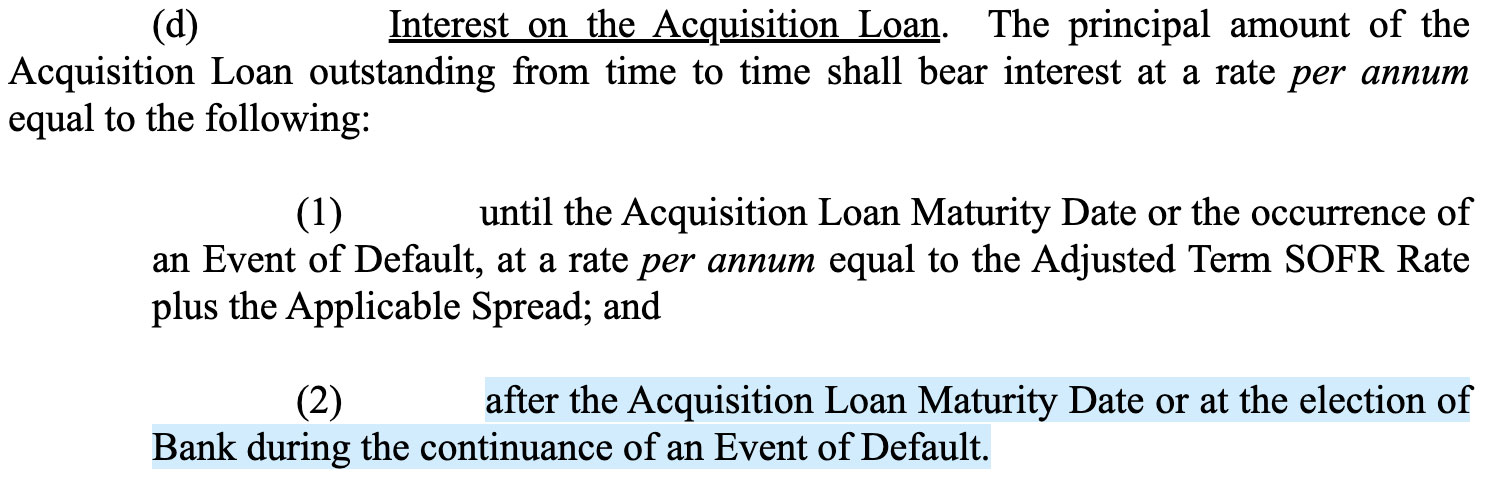

One loan agreement said the debt would bear a higher interest rate after maturity or during default, but the clause never stated what that higher rate was. If the borrower defaulted, the agreement would not clearly say how much additional interest the lender could charge.
The Errors Were Always There. Now They're Hard to Miss
Put the findings together and they point in one direction: issues appear in signed, filed contracts at a steady rate, across every industry and in companies of every size, and they have for as long as we can measure.
For twenty years the issue rate in contracts held flat because review stayed manual and largely untouched by new technology. Now the same AI analysis that surfaced these issues in public filings can run before signature, when a mistake is still a quick fix instead of a dispute.
Better review will not come from more organization, more care, or more lawyers. It will come from pairing legal judgment with tools that check every page with a consistency no human team can sustain.
Spellbook will continue this research, including on filings outside the United States, and publish its findings in aggregate.
We are sharing company-level findings privately. To request a review of your company’s public filings, contact us here.
1.1 Methodology and Scope
We analyzed 3,019 material-contract exhibits filed on EDGAR, the SEC's public filing system, covering more than 500 public companies and filings from 2005 to 2026. Every agreement in the dataset was executed and publicly filed, meaning it had already survived drafting, negotiation, signature, and a disclosure decision before we ever saw it.
We reviewed each contract with Spellbook Review and used two measures throughout this report:
An issue is a drafting, clause, or language-level item a careful lawyer would want to review before signing: clear drafting mistakes, internal inconsistencies, undefined terms, broken cross-references, broken definitions, ambiguities, and clauses that may not work as written. The issue rate is the average number of issues per contract, so a group at 1.37 averaged 1.37 issues each, and any figure above 1.0 means more than one issue per contract on average.
A high-risk issue is one assigned Spellbook's highest severity grade: a mistake that changes the meaning of the agreement in a substantially negative way for at least one party. Of the 3,661 issues in this study, 94 were high-risk. The high-risk rate is the number of high-risk issues per 100 contracts, shown as a percentage—about 3.1% across the full dataset, ranging from under 1.4% in the most issue-free categories to 15% in the riskiest.
These numbers should be read as a floor. We ran the review in a deliberately conservative mode that flags fewer issues than Spellbook does by default, and we limited it to issues visible within the filed exhibit itself—references to schedules, exhibits, or outside agreements not included in the filing were set aside.
